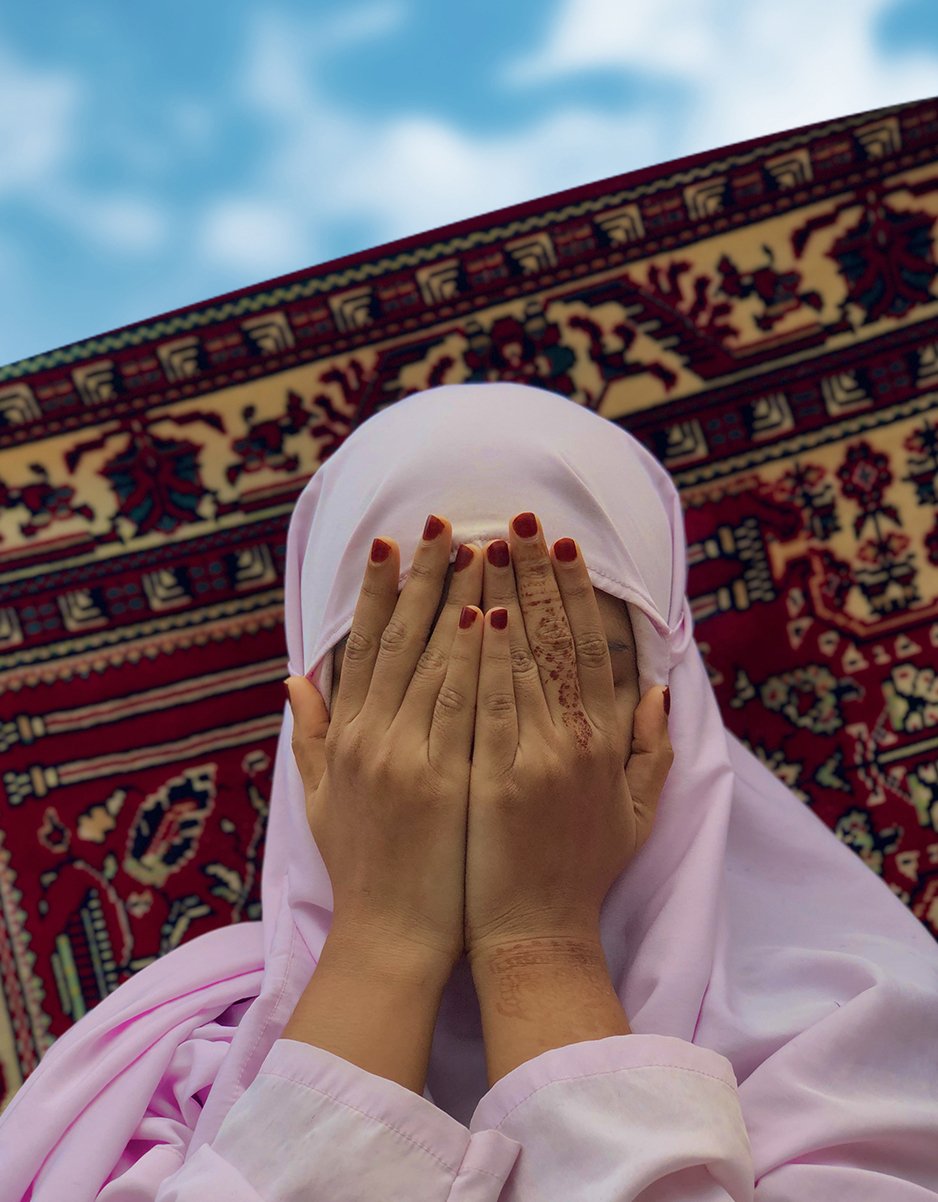
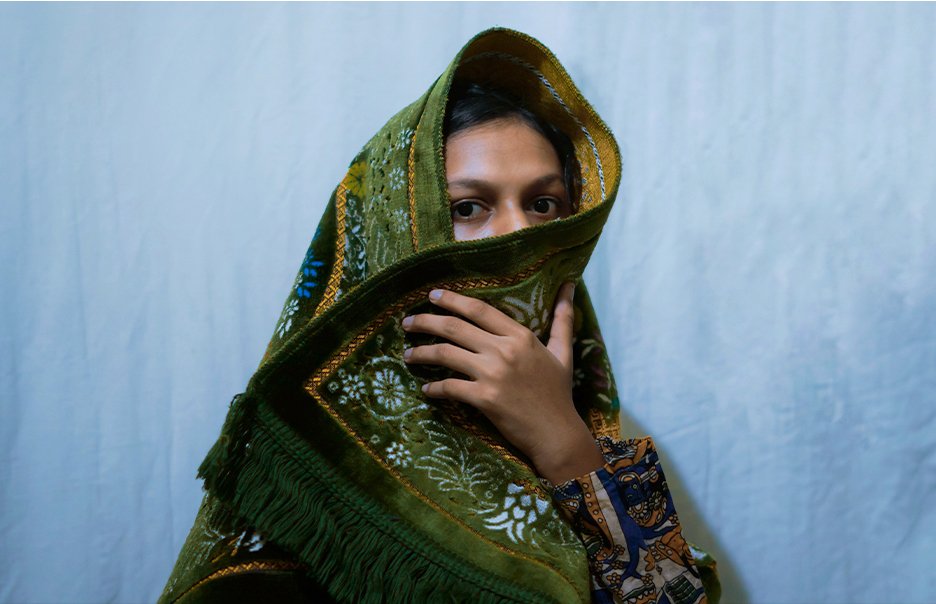
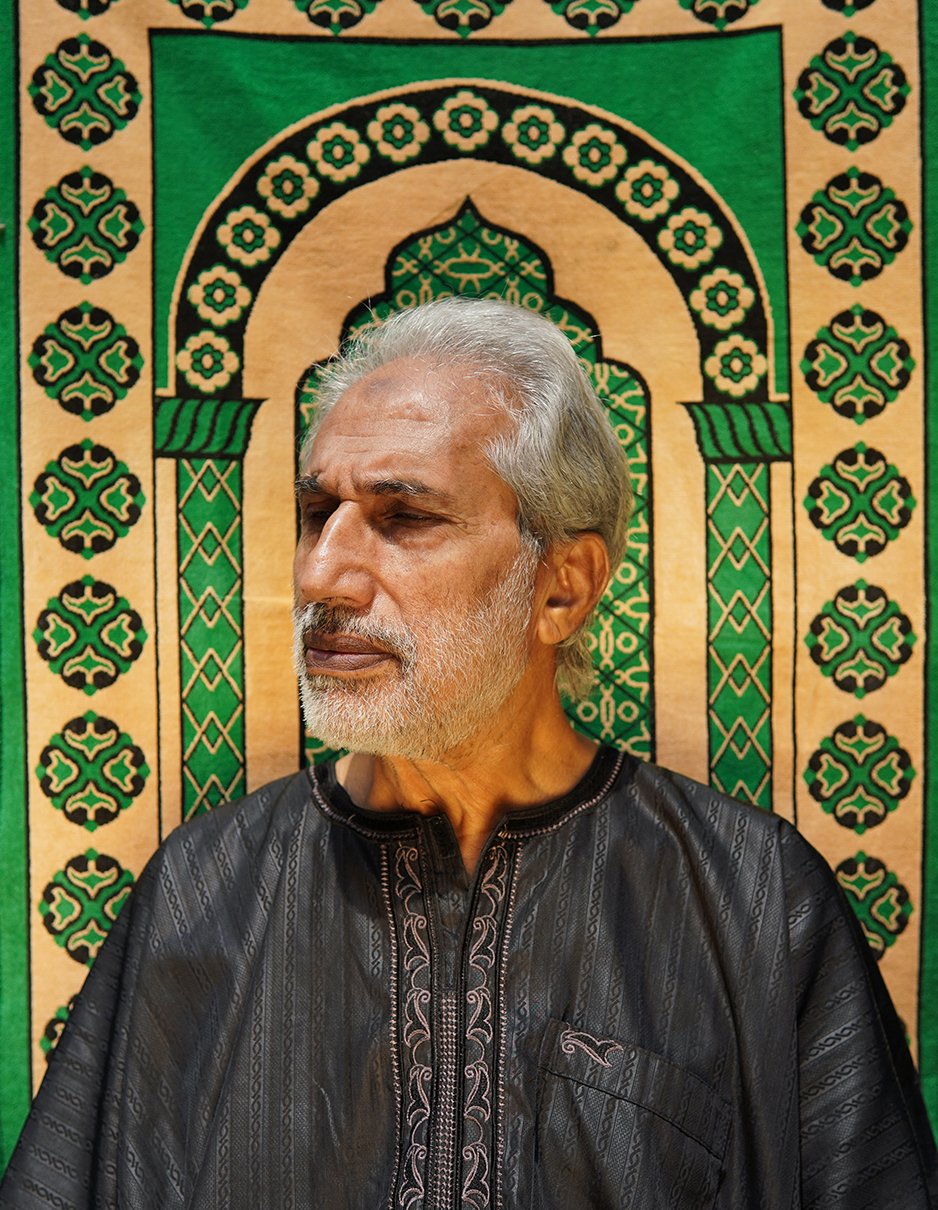
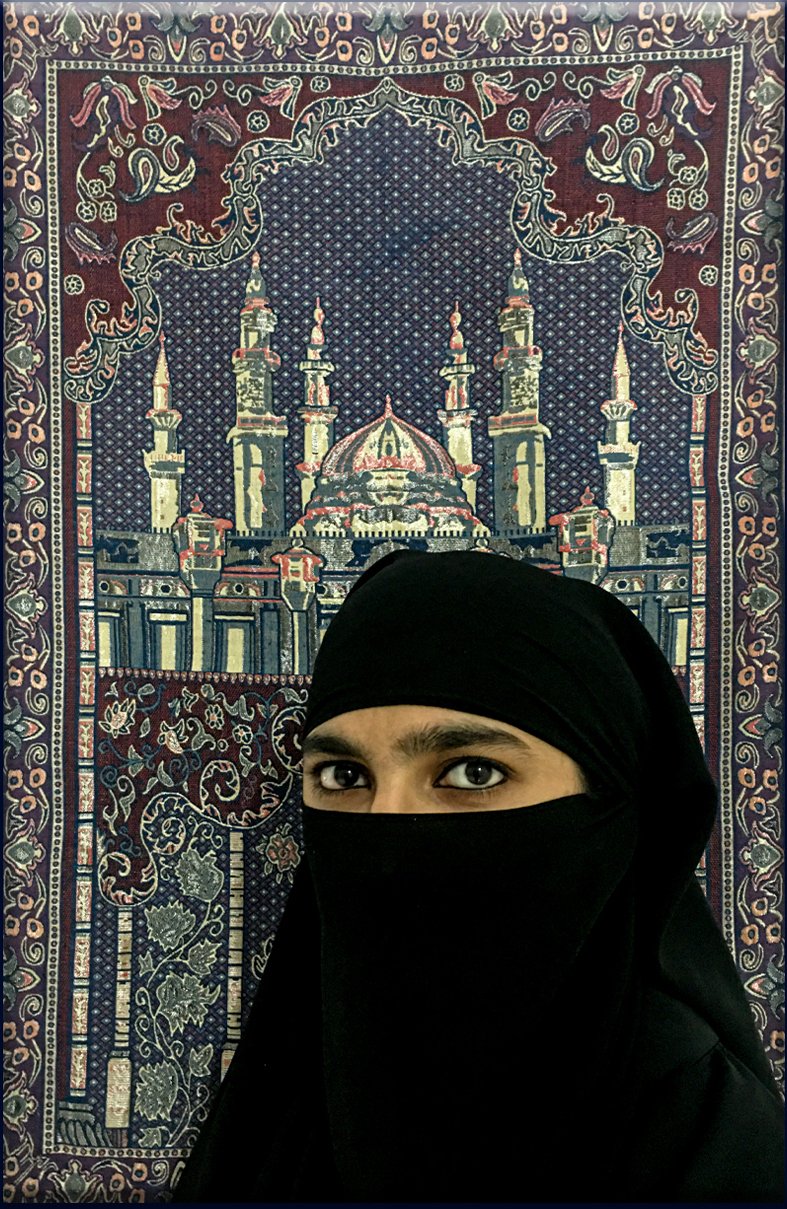
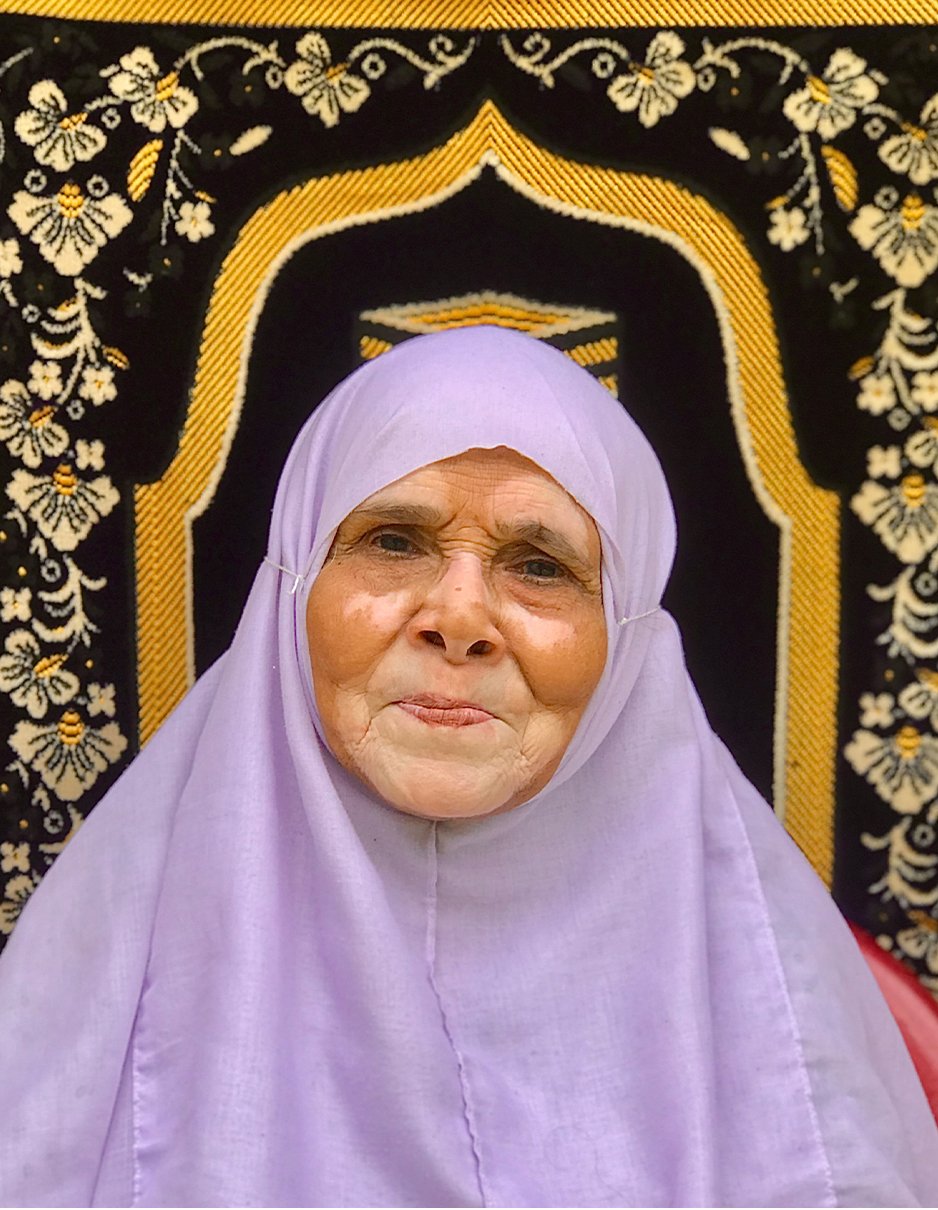
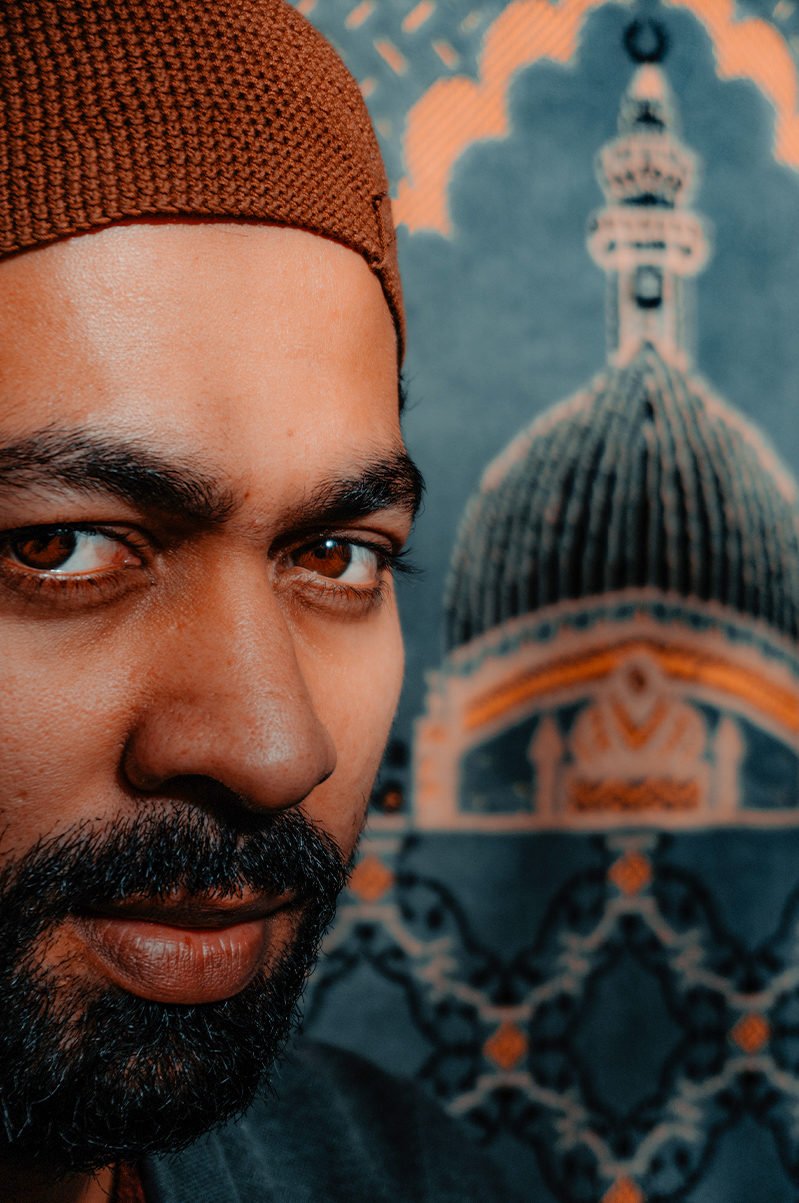
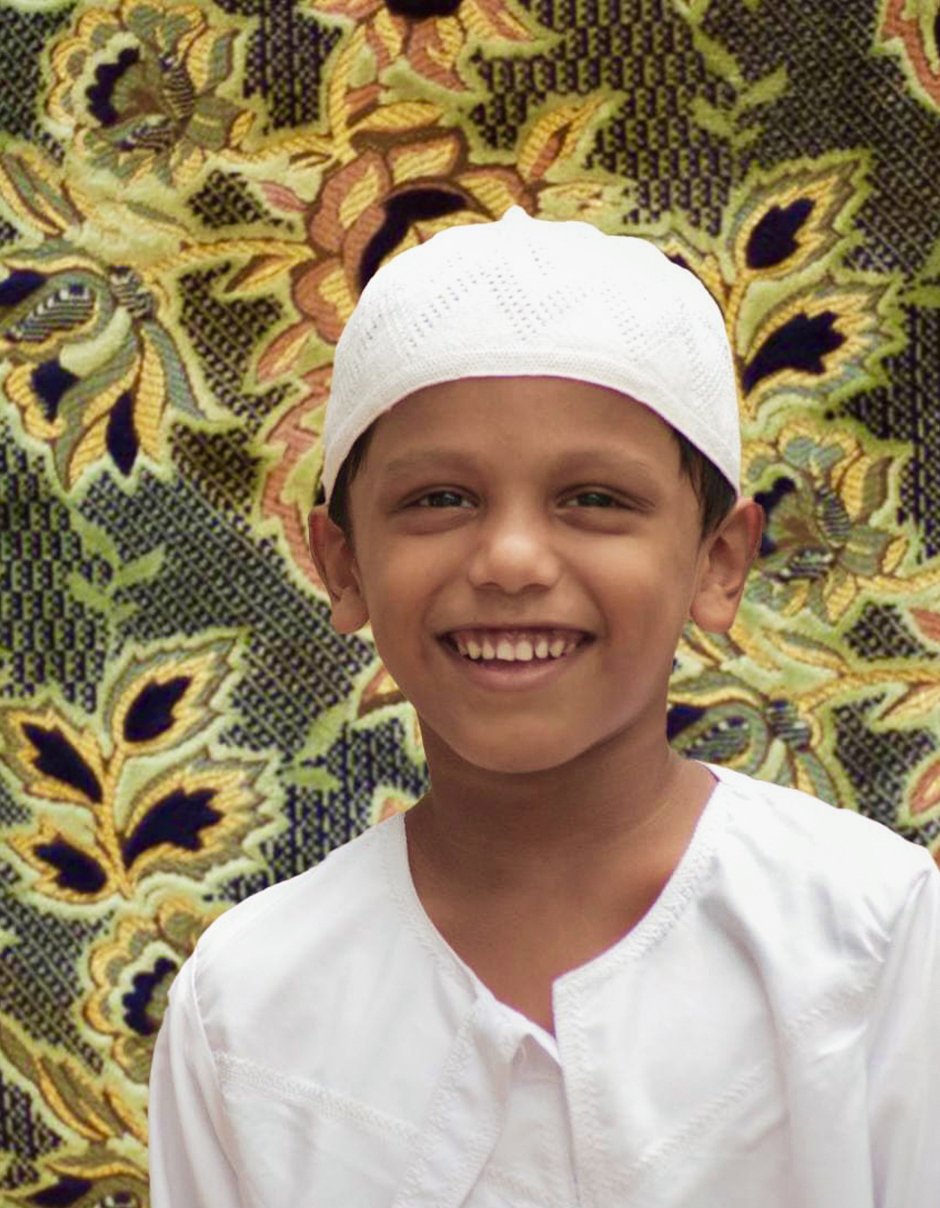
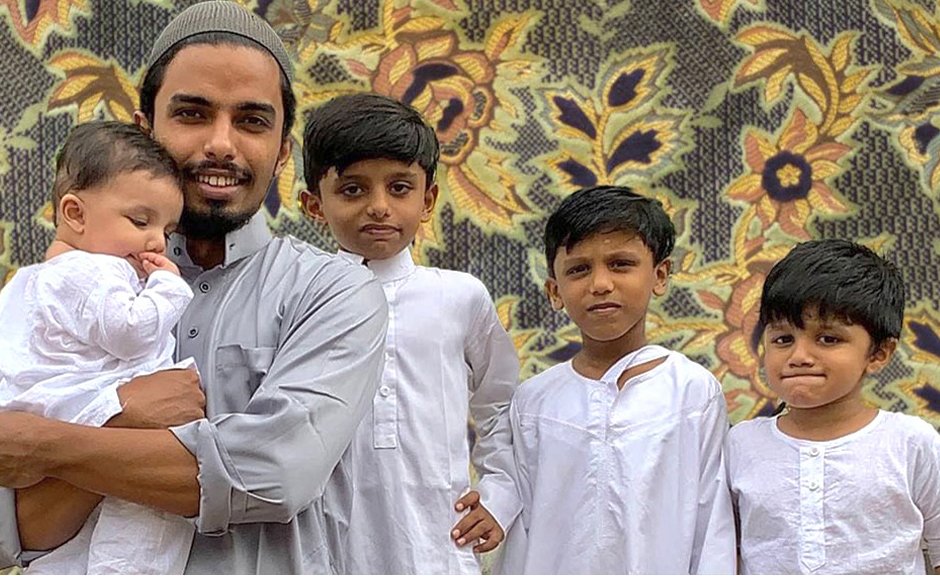
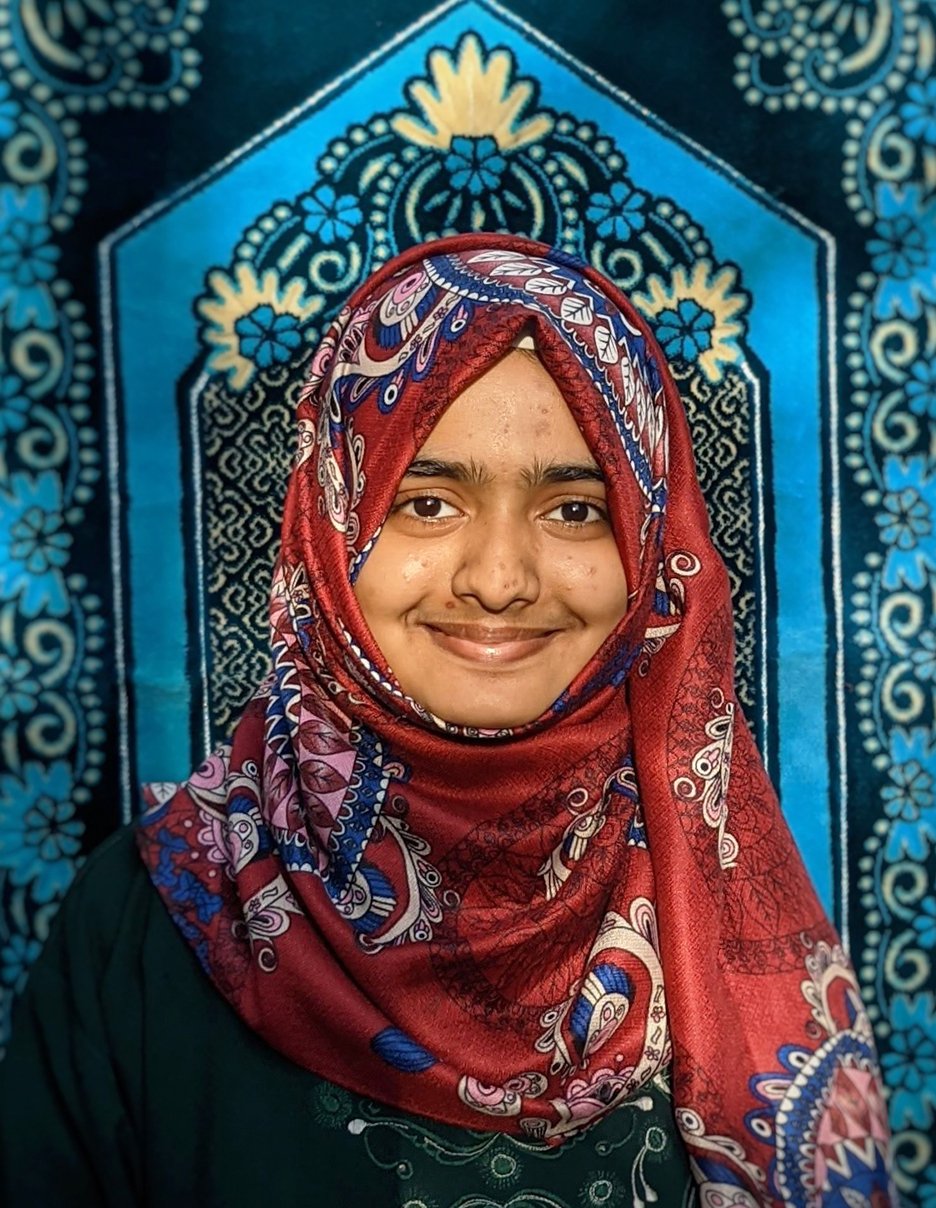
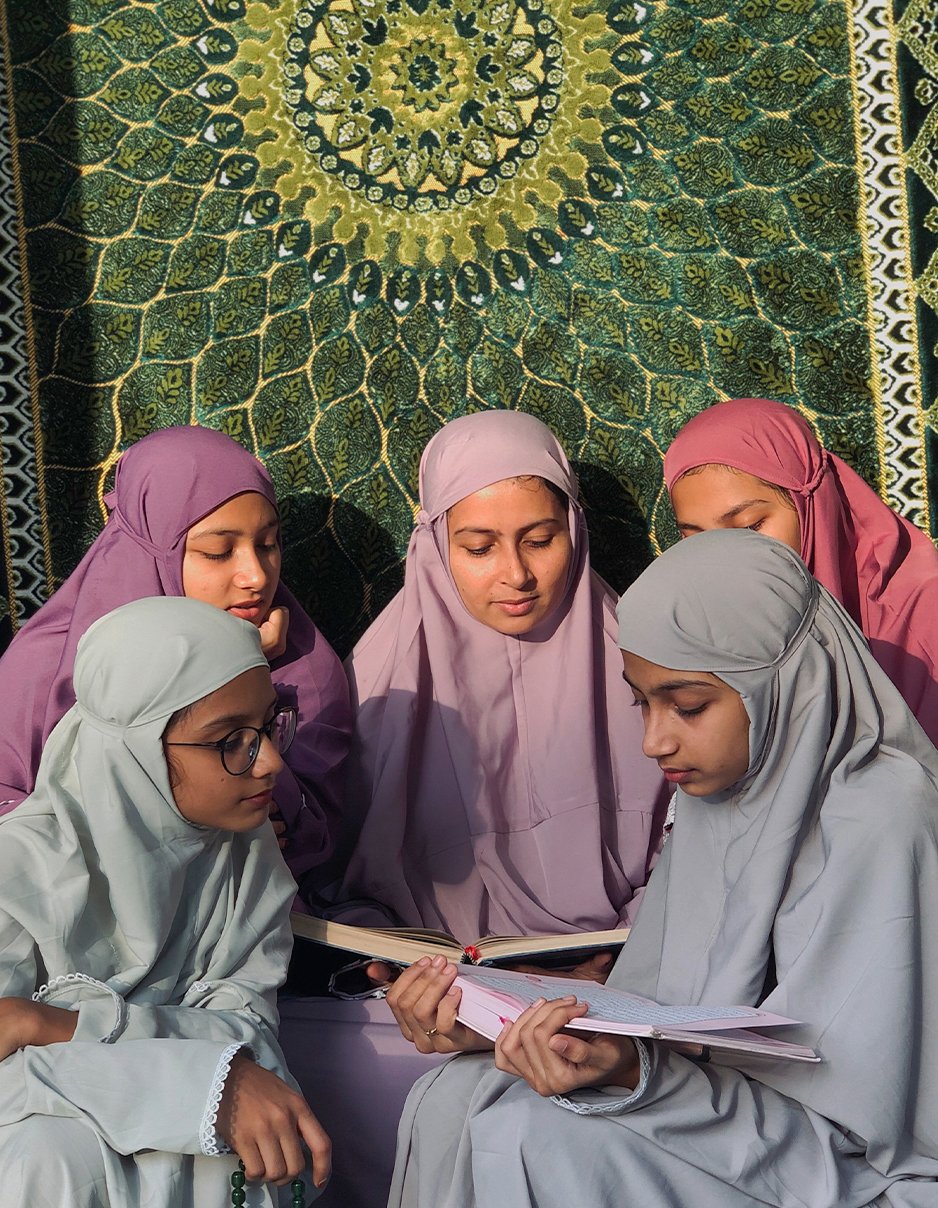
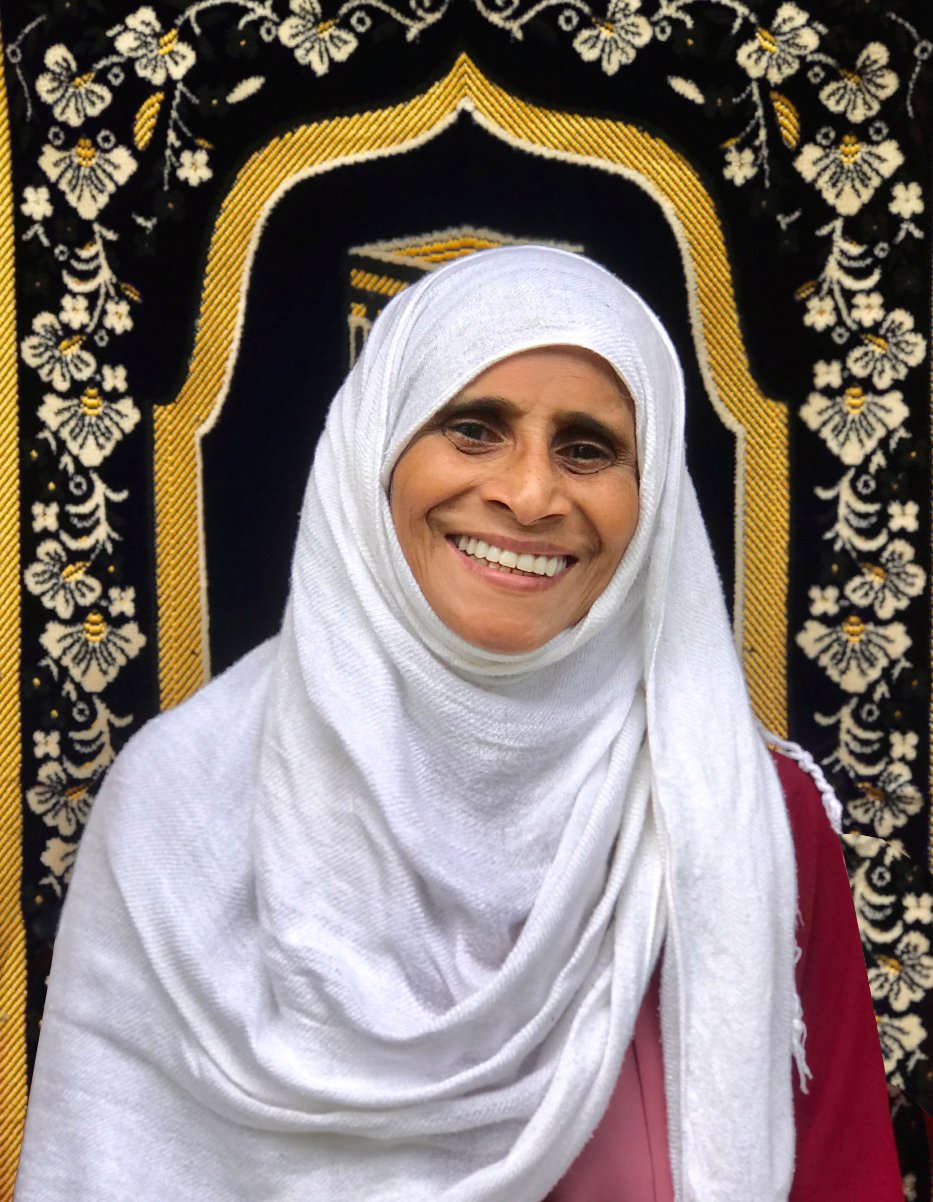
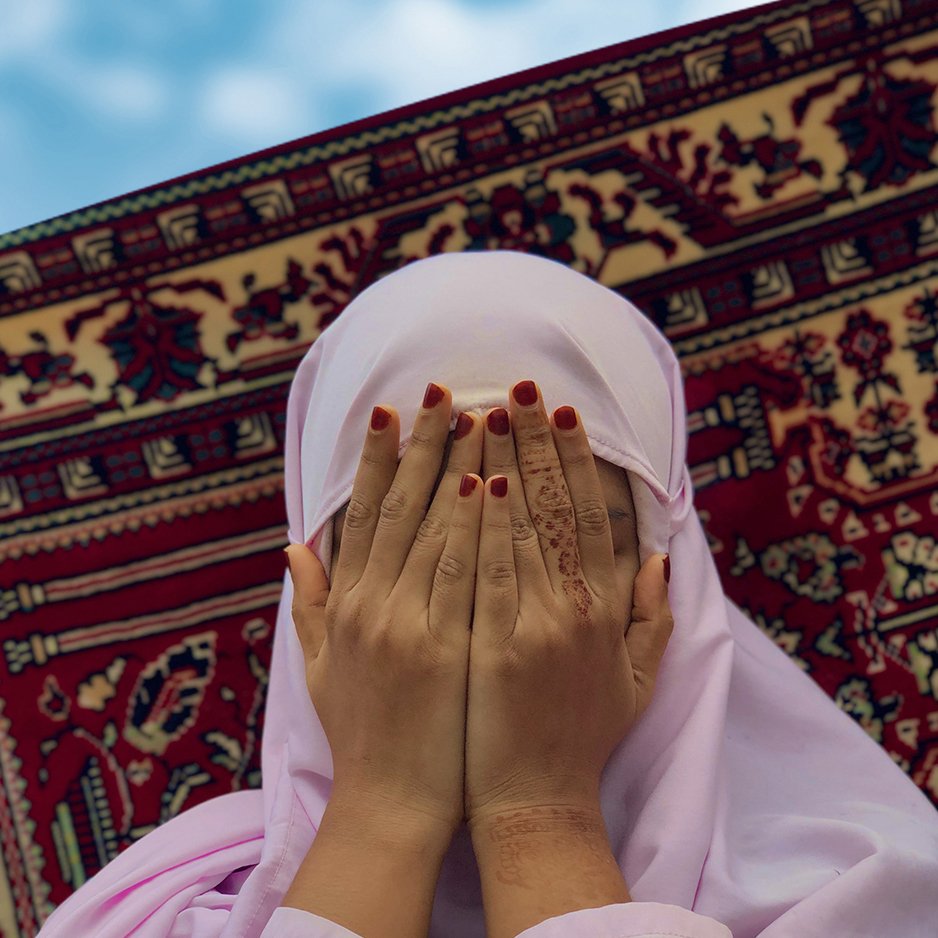
Thasveer portrait series is a collection of photographs of people from the Muslim community with prayer rugs as the backdrop. They are documented wearing traditional prayer attire or carrying objects of religious significance. The series draws inspiration from ‘Ramadan Project’ by Mous Lamrabat, a Moroccan-Belgian photographer, wherein he brought together Muslims from across the world to exhibit their collection of prayer rugs.
Muslims attach to prayer rugs at different levels. It can be aesthetic, sensual, sacred or profane. Nevertheless, the prayer rugs, through the sense of touch or sight invoke a sense of spirituality and solace. This series is an attempt to document the pride, affection and bond Muslims have for their prayer rugs.
Prayer rugs over the years have not been restricted to a single design. Muslims in various lands have incorporated their life into their Islamic artefacts. Motifs from their popular cultural language including tree of heaven have been part of the designs. Thanks to the mass-produced prayer rugs that captivated the Kerala Muslim lifestyle after the Gulf boom, they have evolved into having almost a standard design. The design usually include arches indicating the mihrab (niche), and depiction of Ka’aba or domes and minarets of masjids.
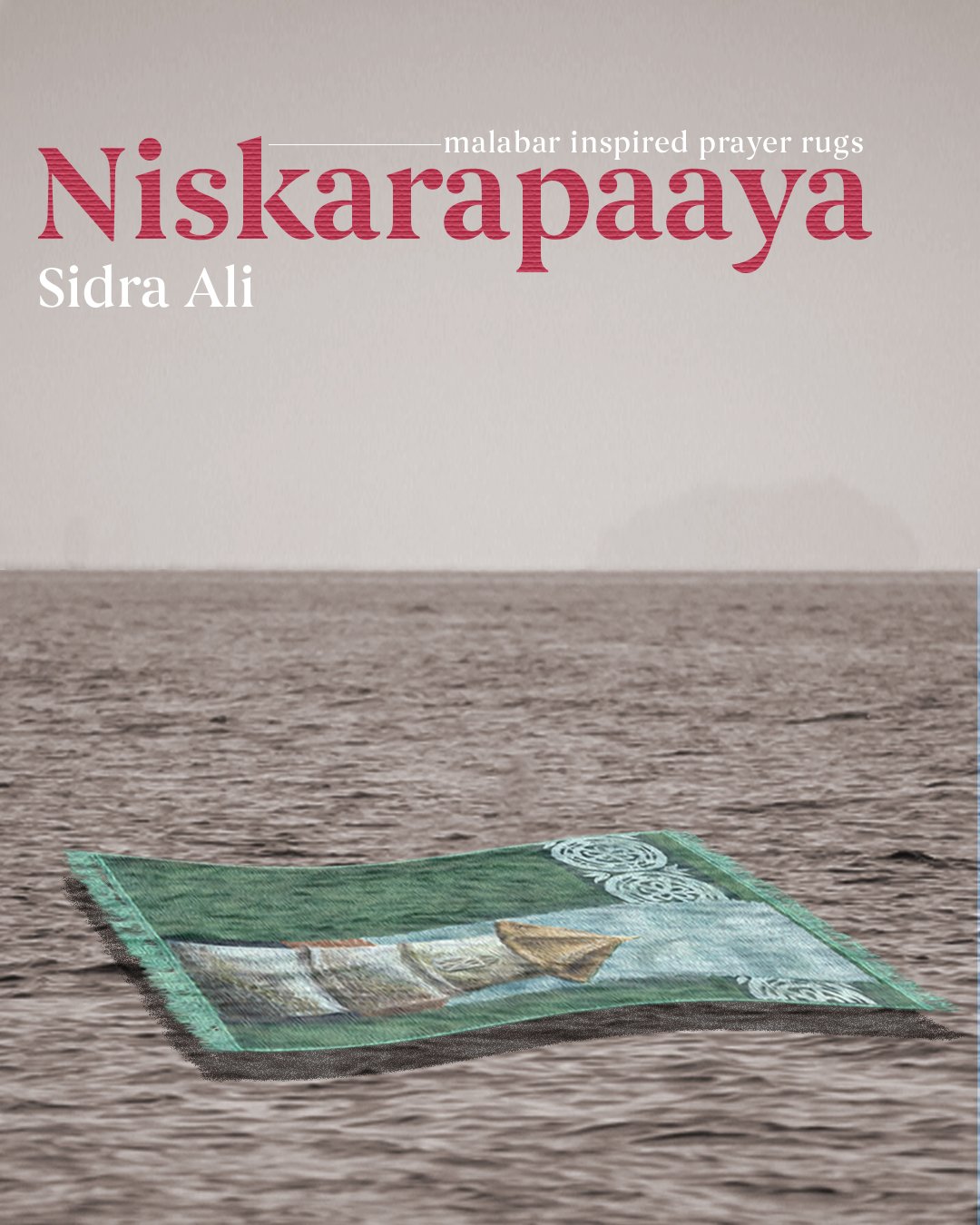
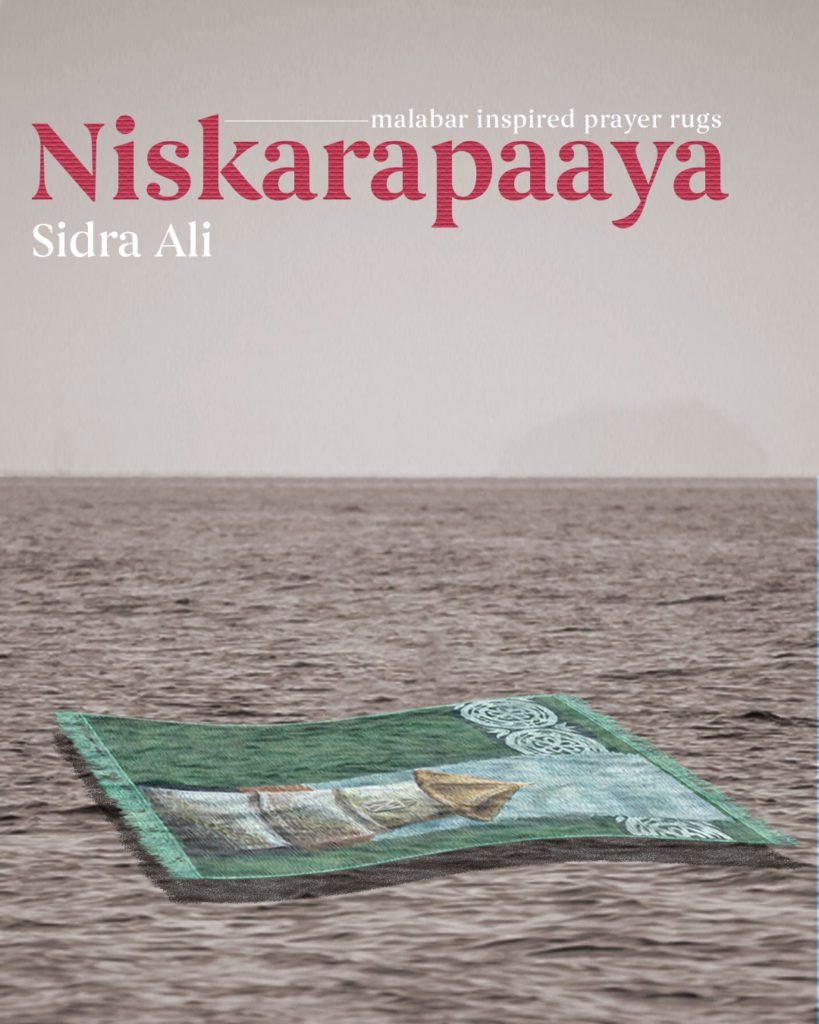
Keeping alive the documentation of vernacular Muslim life in Kerala, ‘Niskarapaaya’ attempts to imagine prayer rugs carrying motifs that are more close to home. Moving beyond traditional prayer rugs made from korai grass or screwpine leaves, the designs here are imagined on the soft woven fabric that we are all comfortable and familiar with.
The designs presented here are still well within the standard of how prayer rugs look like, but the motifs in it are replaced by our cultural particularities. Thus imagining a soft woven niskarapaaya that depicts us. However, it doesn’t imply that the existing (commercial) prayer rug designs don’t connect to us. This is an attempt to imagine vernacular designs in prayer rugs.
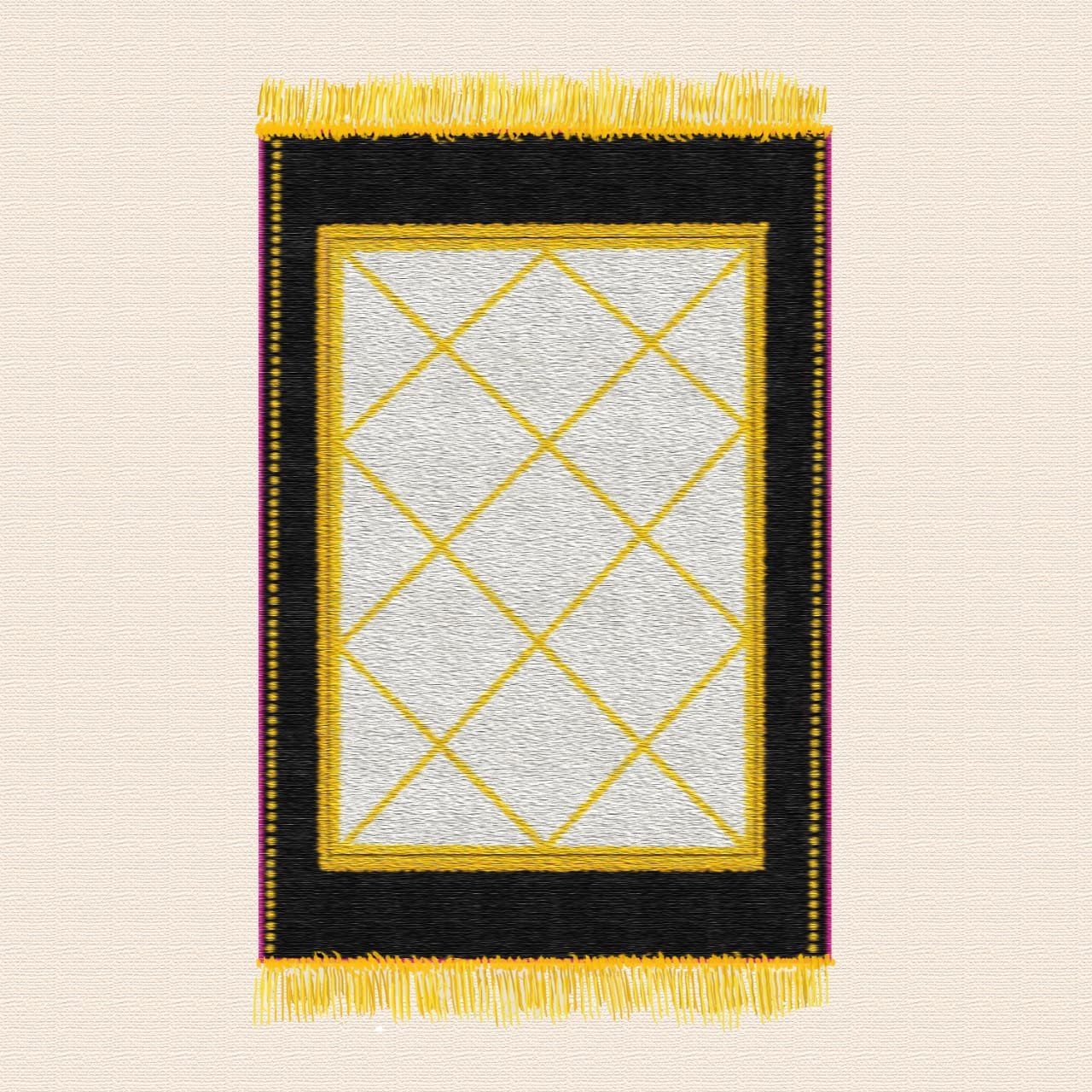
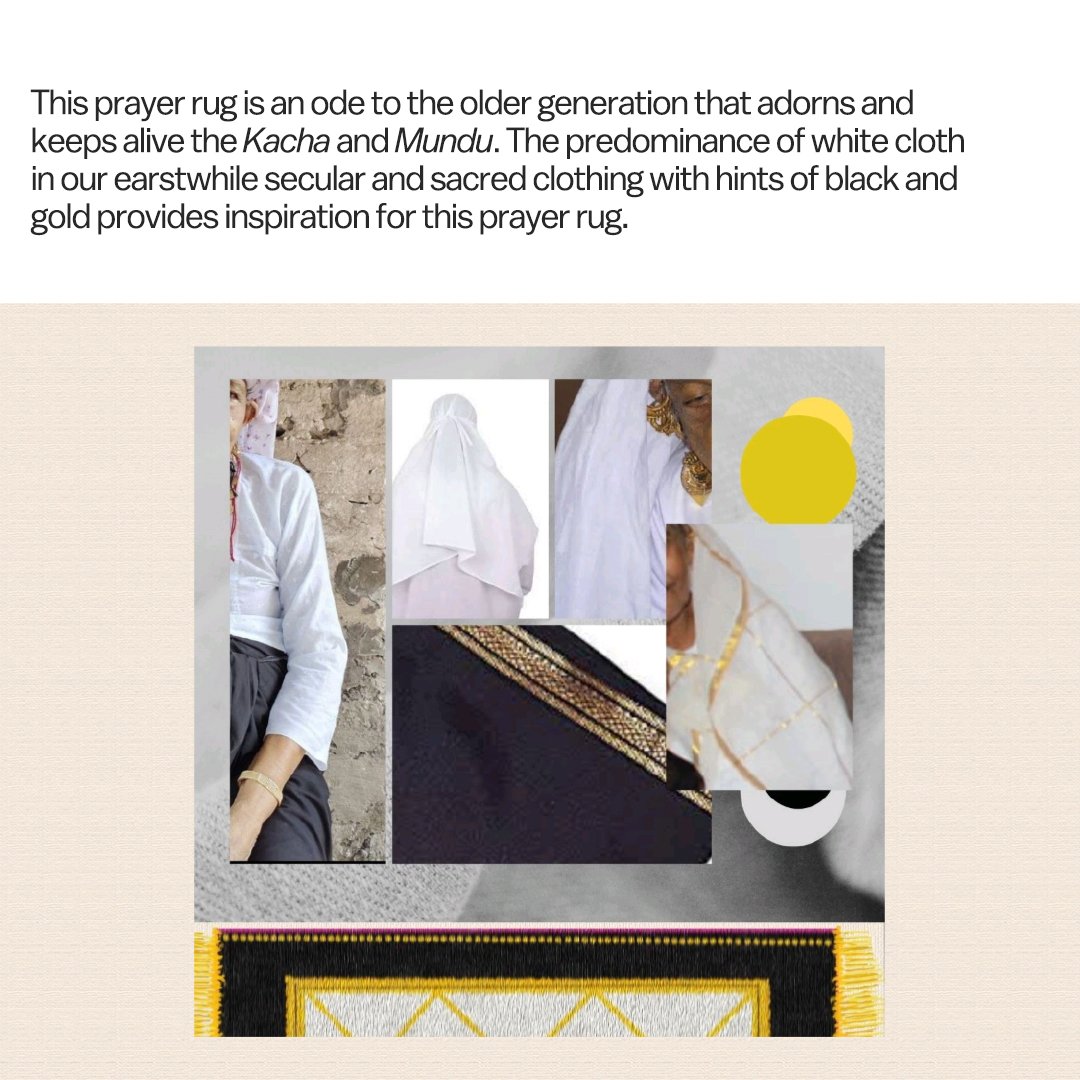
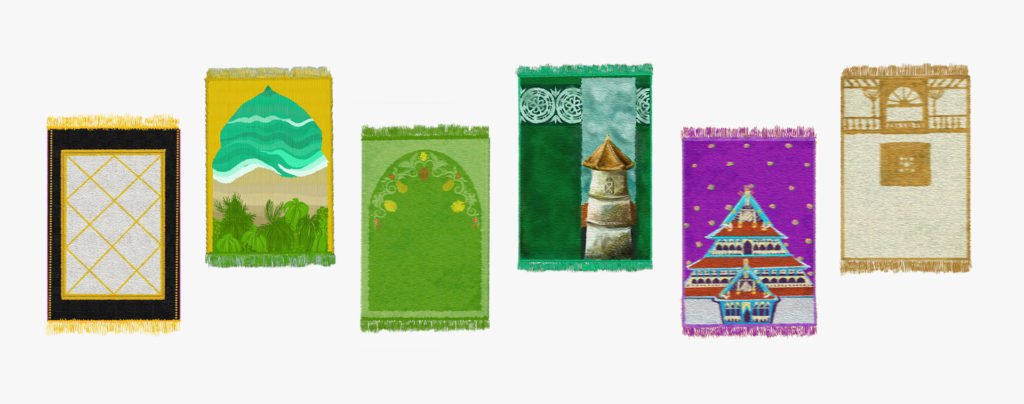
The prayer rug is an ode to the older generation that adorns and keeps alive the kacha and mundu. The predominance of white cloth in our erstwhile secular and sacred clothing with hints of black and gold provides inspiration for this musallah.
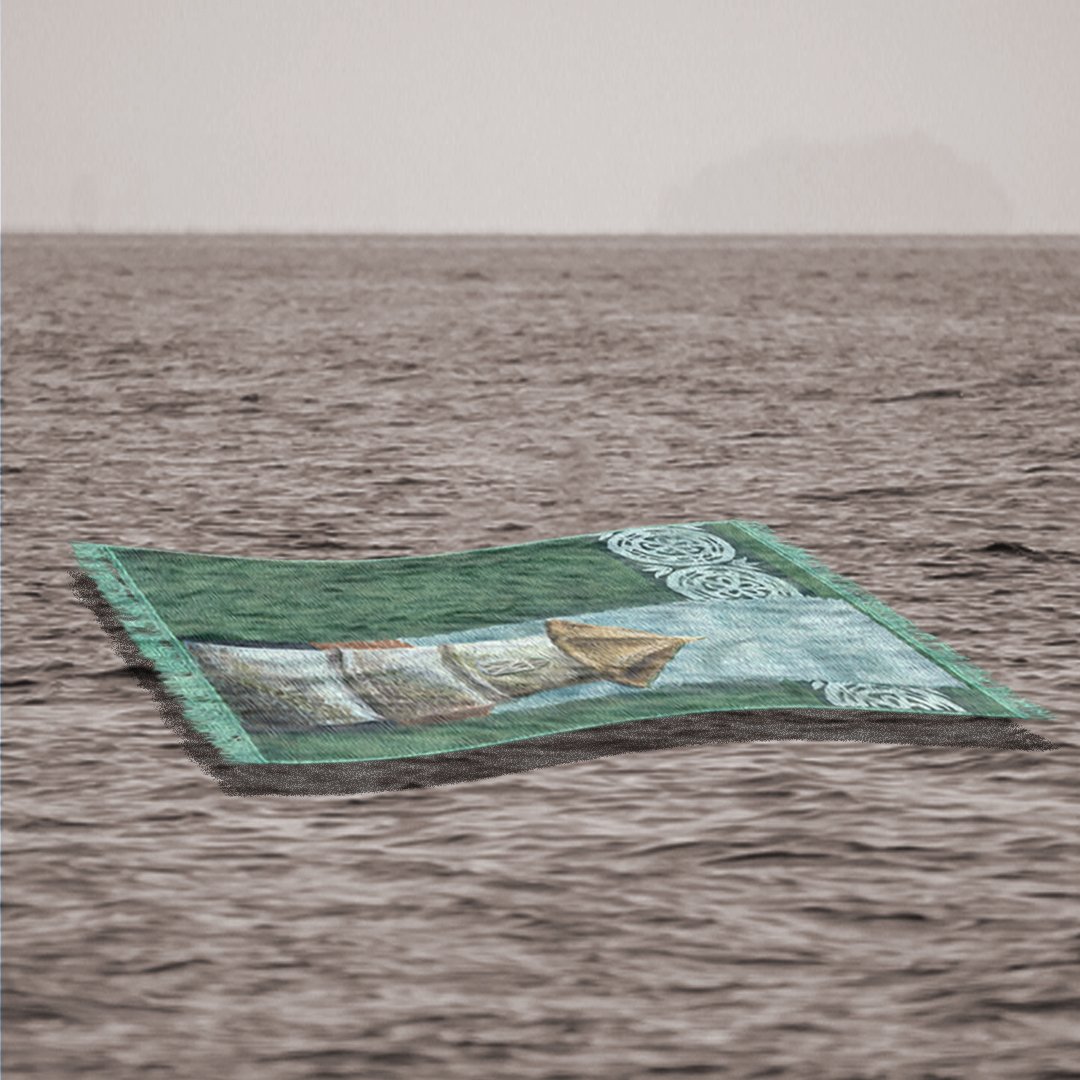
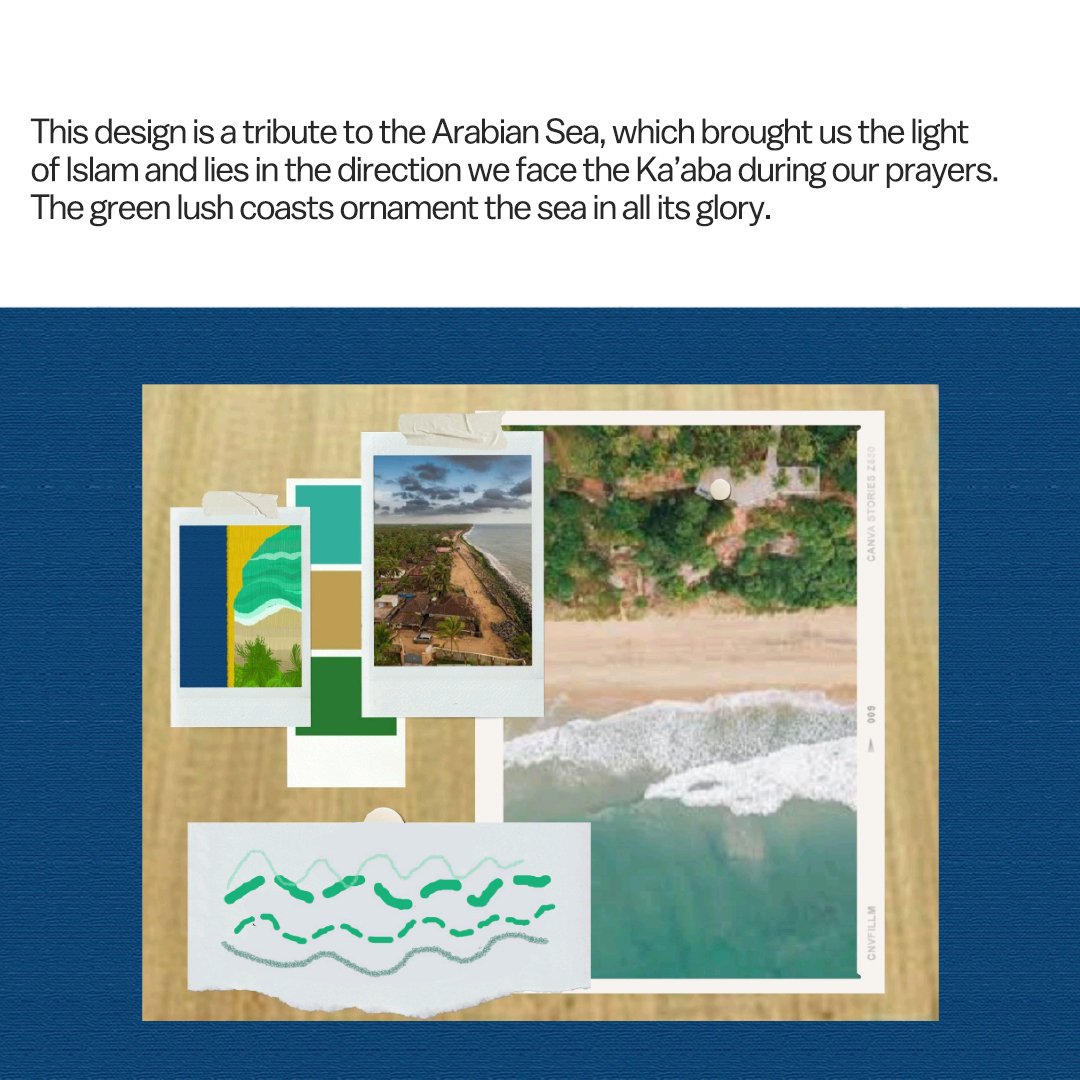
This design is a tribute to the Arabian Sea, which brought us the light of Islam and lies in the direction we face the Ka’aba during our prayers. The green lush coasts ornament the sea in all its glory.
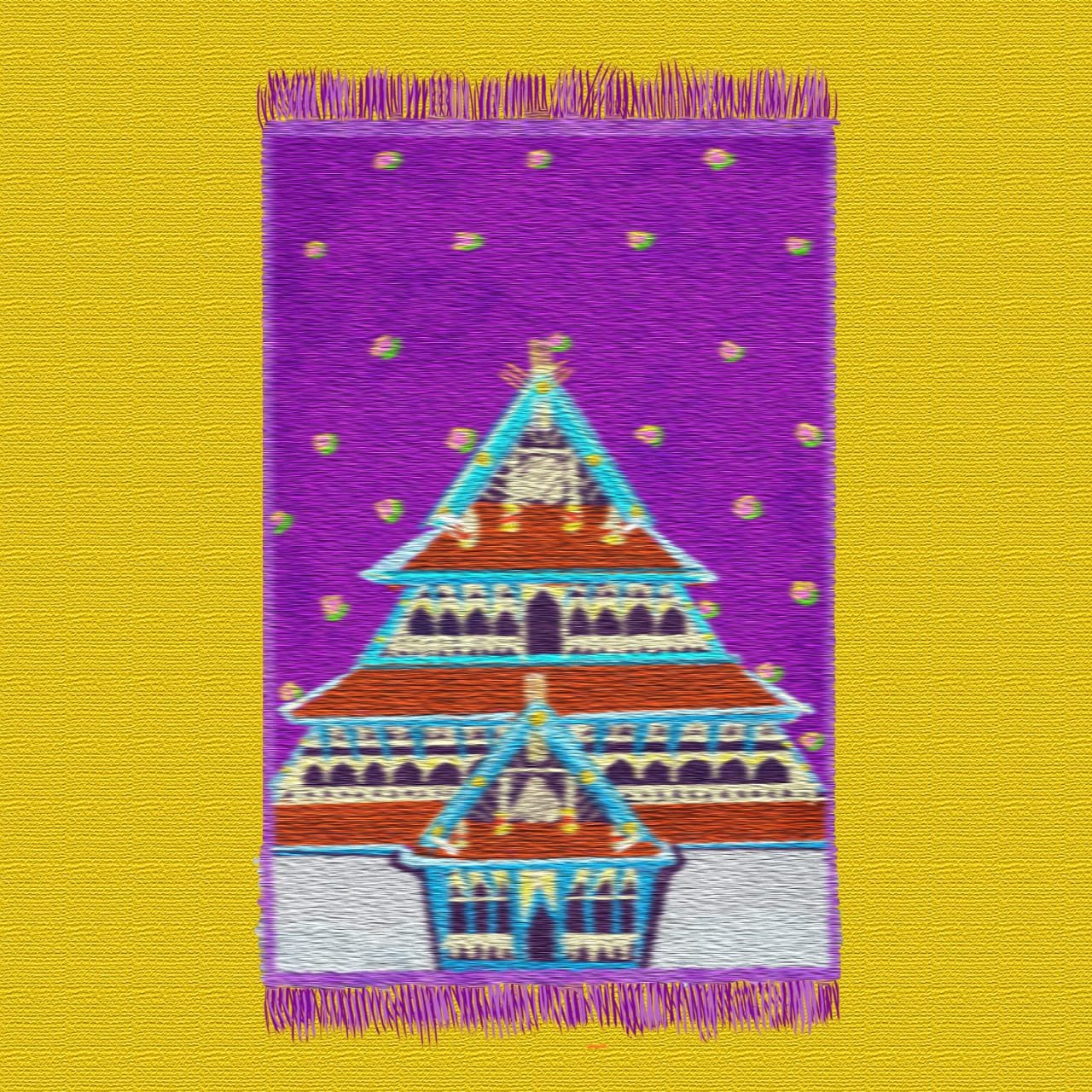
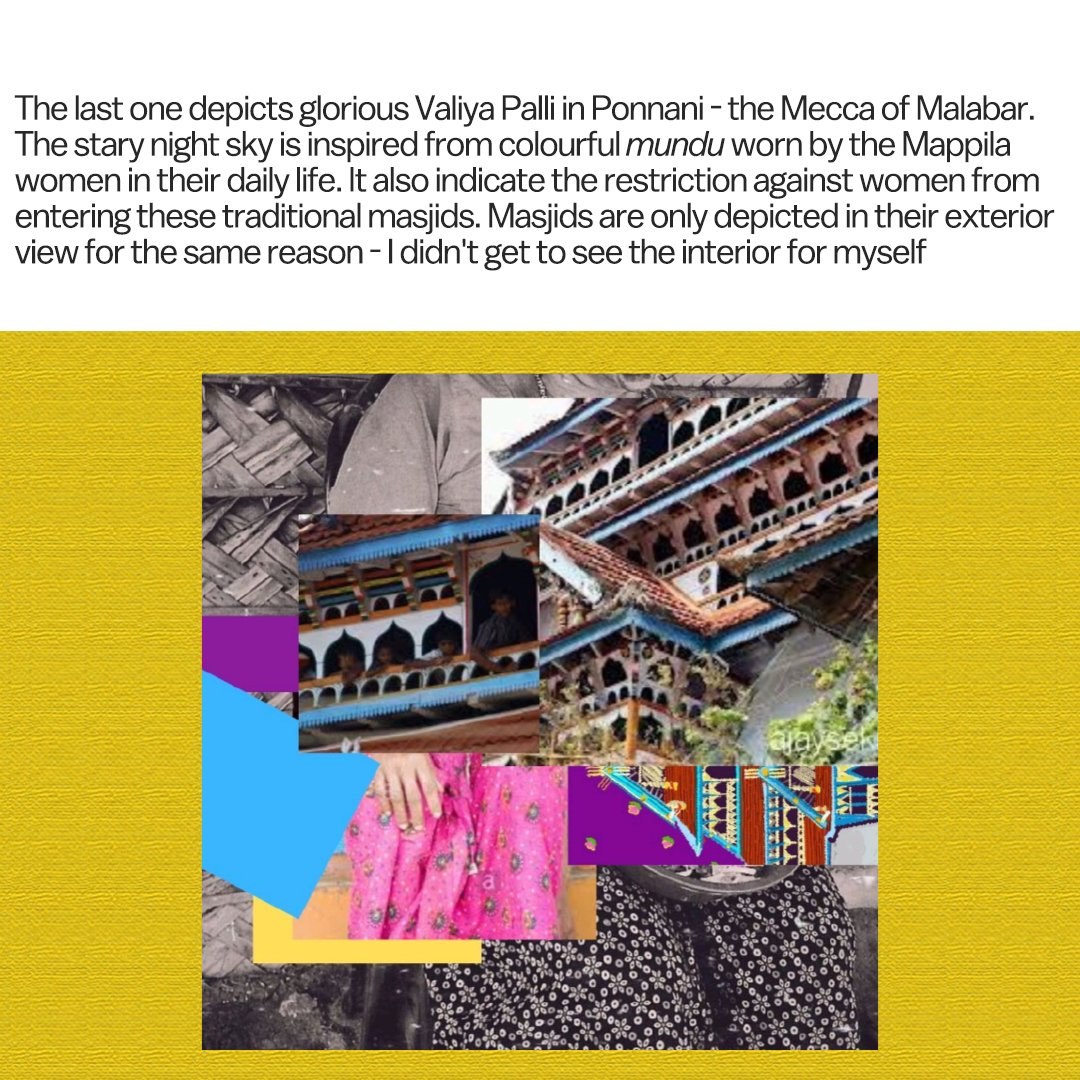
This design depicts the glorious Valiya Palli in Ponnani – the Mecca of Malabar. The stary night sky is inspired from colourful mundu worn by the Mappila women in their daily life. It also indicates the restriction against women from entering these traditional masjids.
Keeping alive the documentation of vernacular Muslim life in Kerala, ‘Niskarapaaya’ attempts to imagine prayer rugs carrying motifs that are more close to home. Moving beyond traditional prayer rugs made from korai grass or screwpine leaves, the designs here are imagined on the soft woven fabric that we are all comfortable and familiar with.
The designs presented here are still well within the standard of how prayer rugs look like, but the motifs in it are replaced by our cultural particularities. Thus imagining a soft woven niskarapaaya that depicts us. However, it doesn’t imply that the existing (commercial) prayer rug designs don’t connect to us. This is an attempt to imagine vernacular designs in prayer rugs.
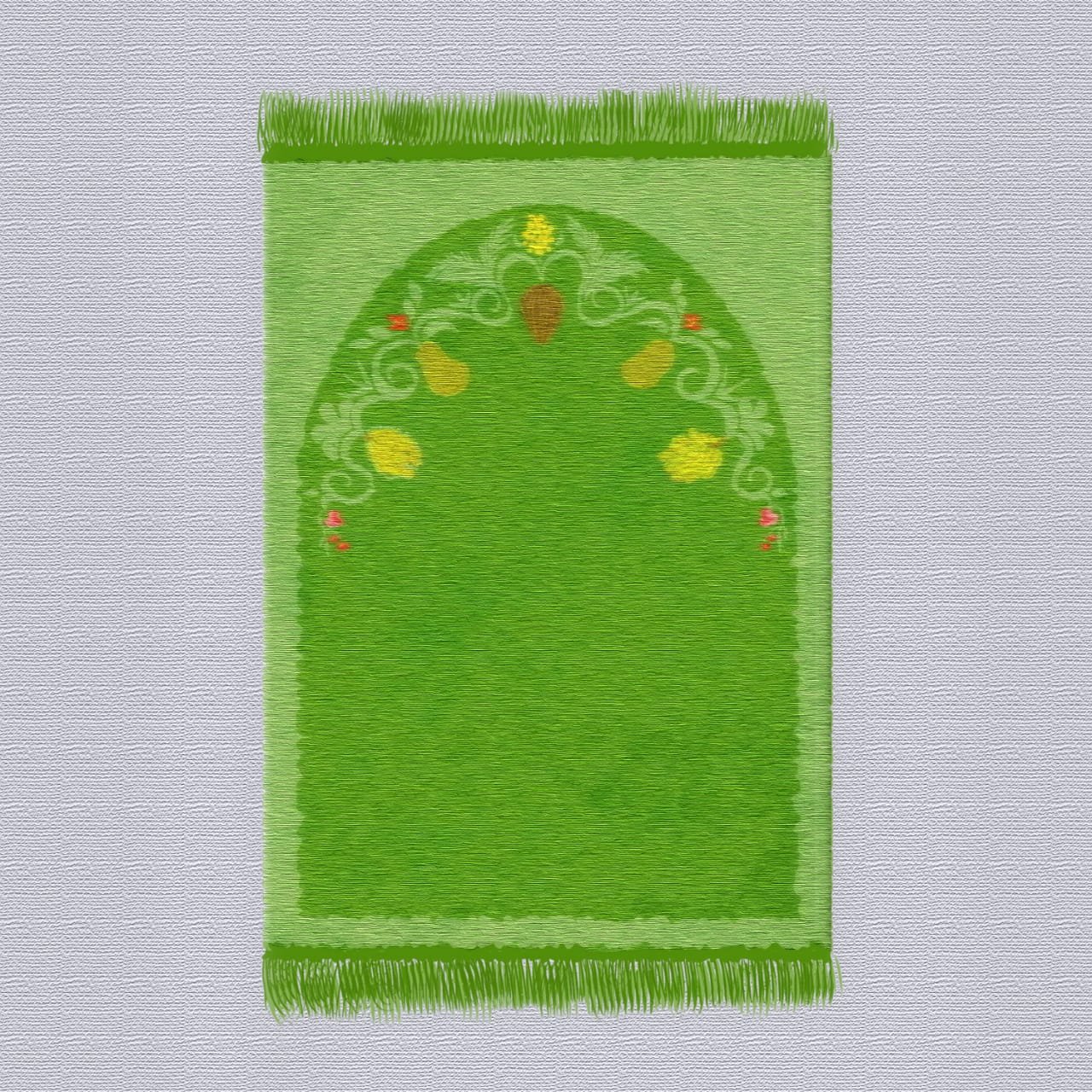
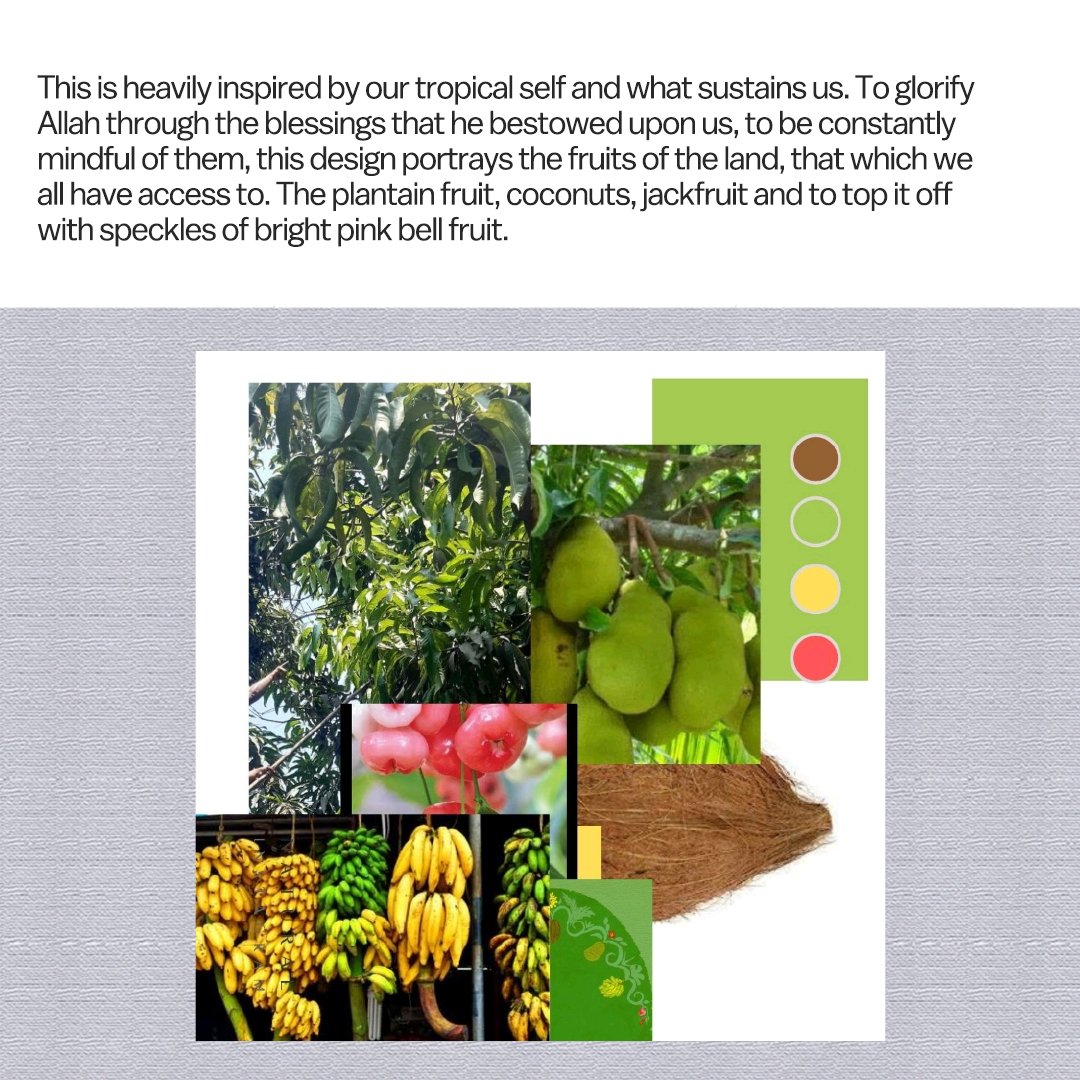
Our tropical self is the primary inspiration for this prayer rug. To glorify Allah through the blessings that he bestowed upon us, to be constantly mindful of them, this design portrays the fruits of the land, that which we all have access to. The plantain fruit, coconuts, jackfruit and to top it off with specks of bright pink bell fruit.
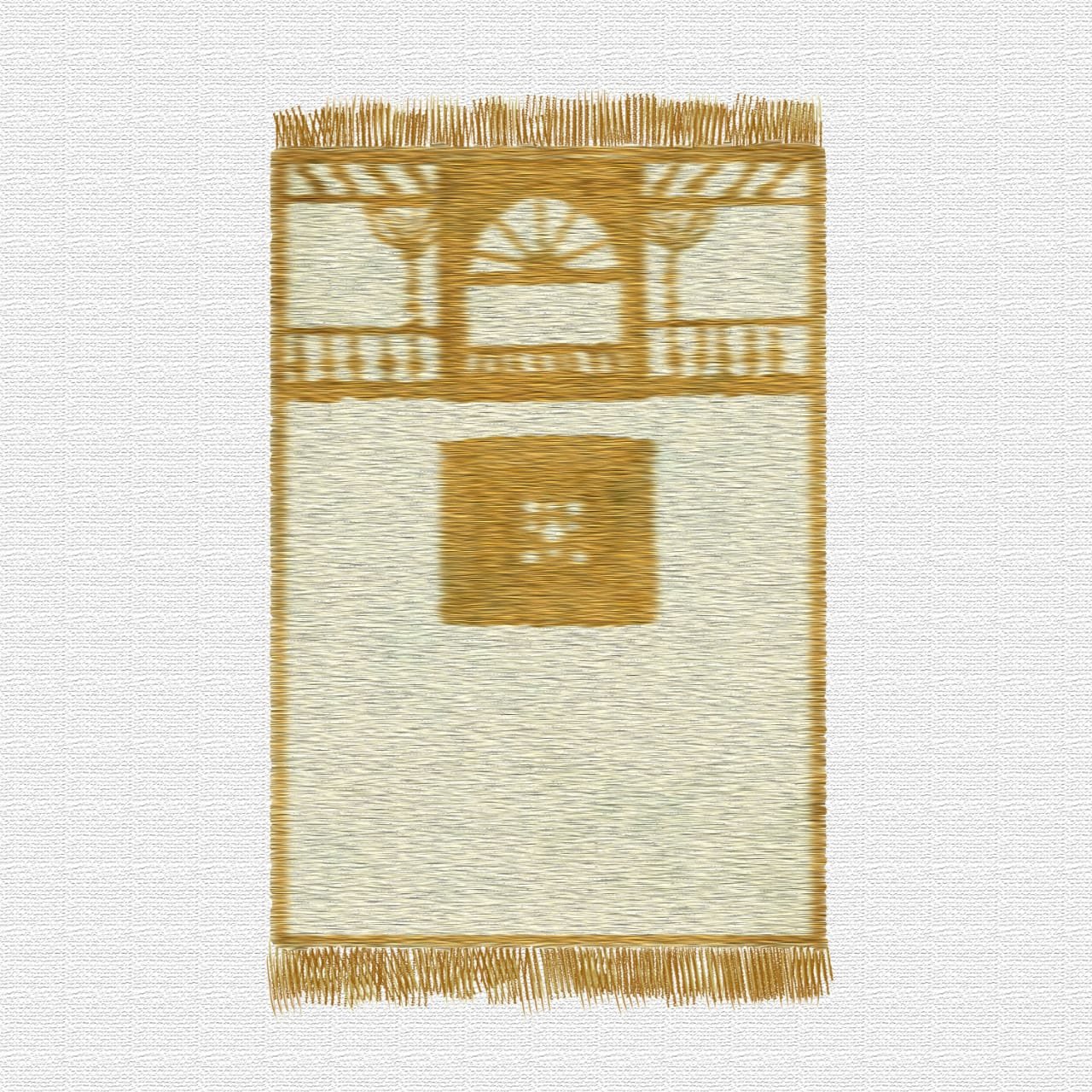
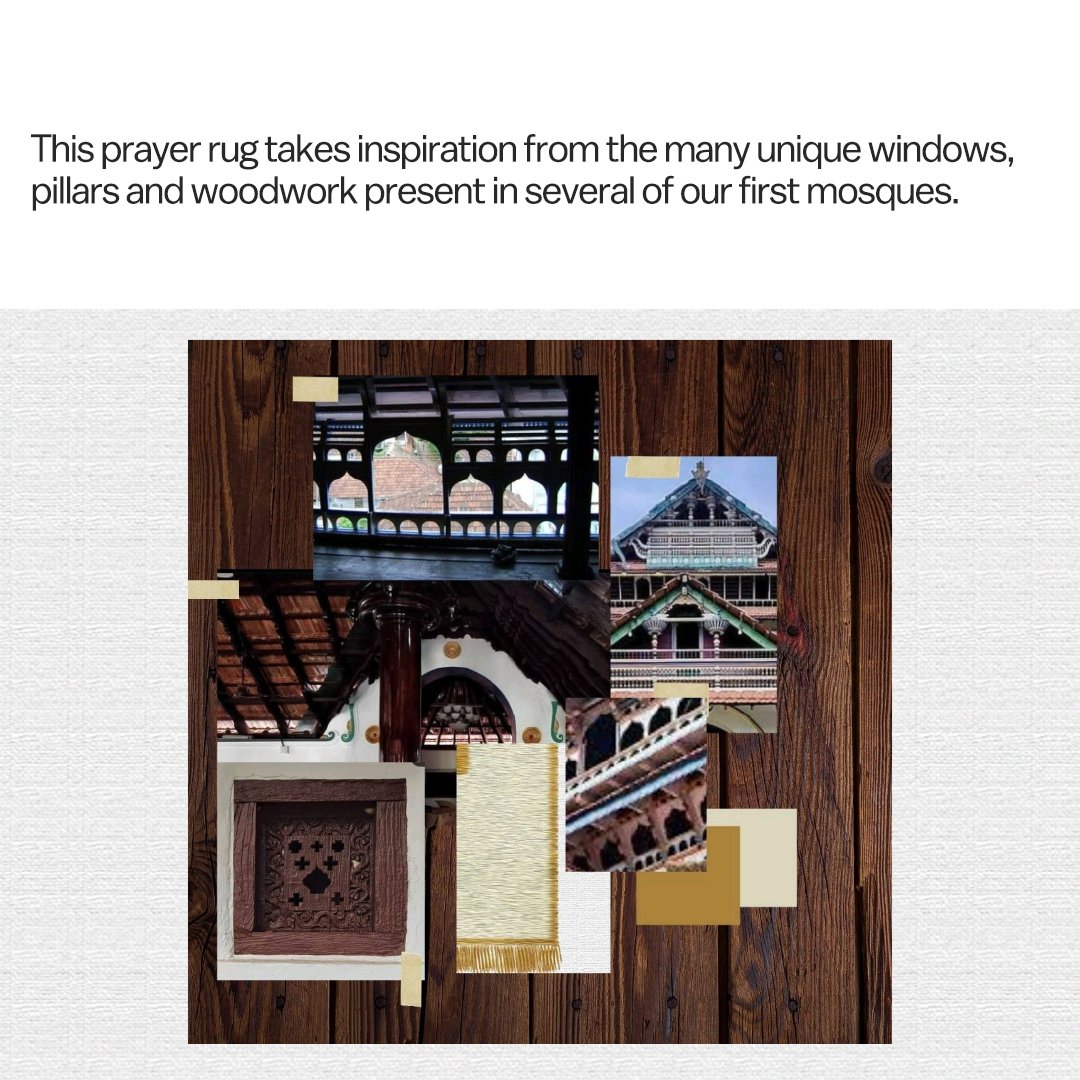
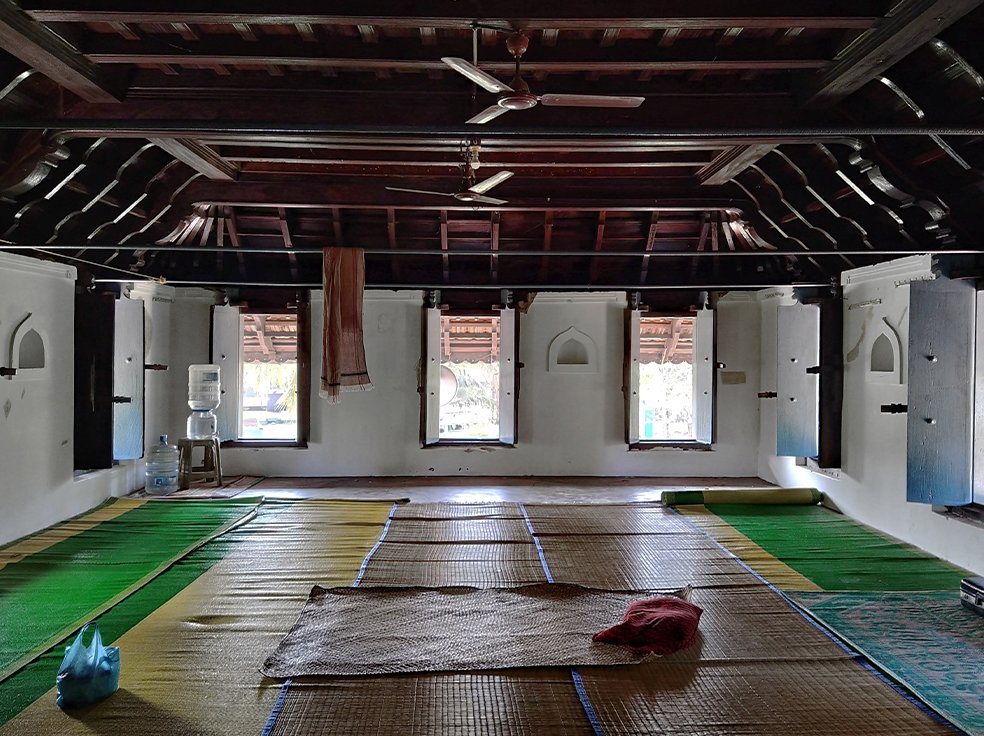
The many unique windows, pillars and woodwork present in several of our first mosques inspire this prayer rug.
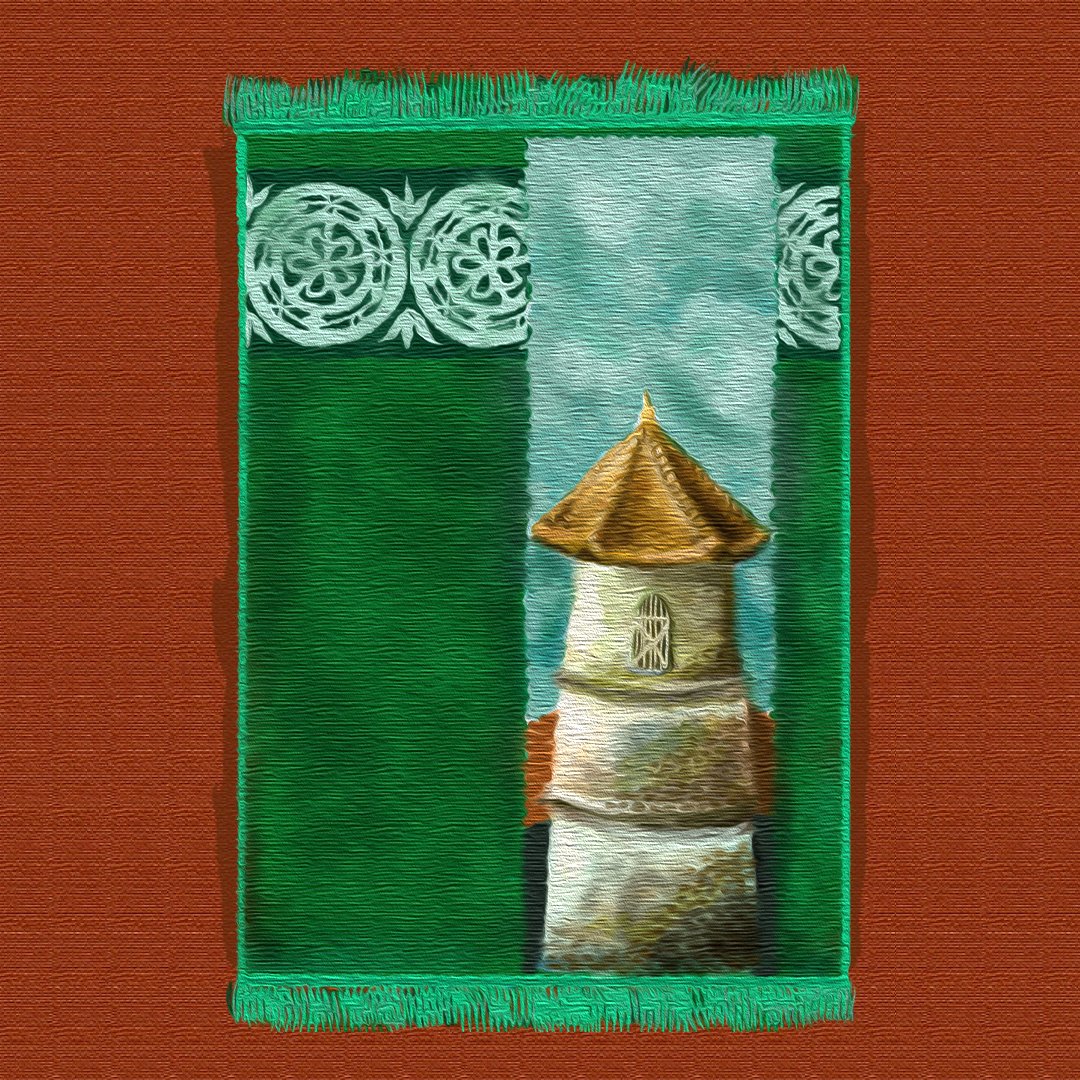
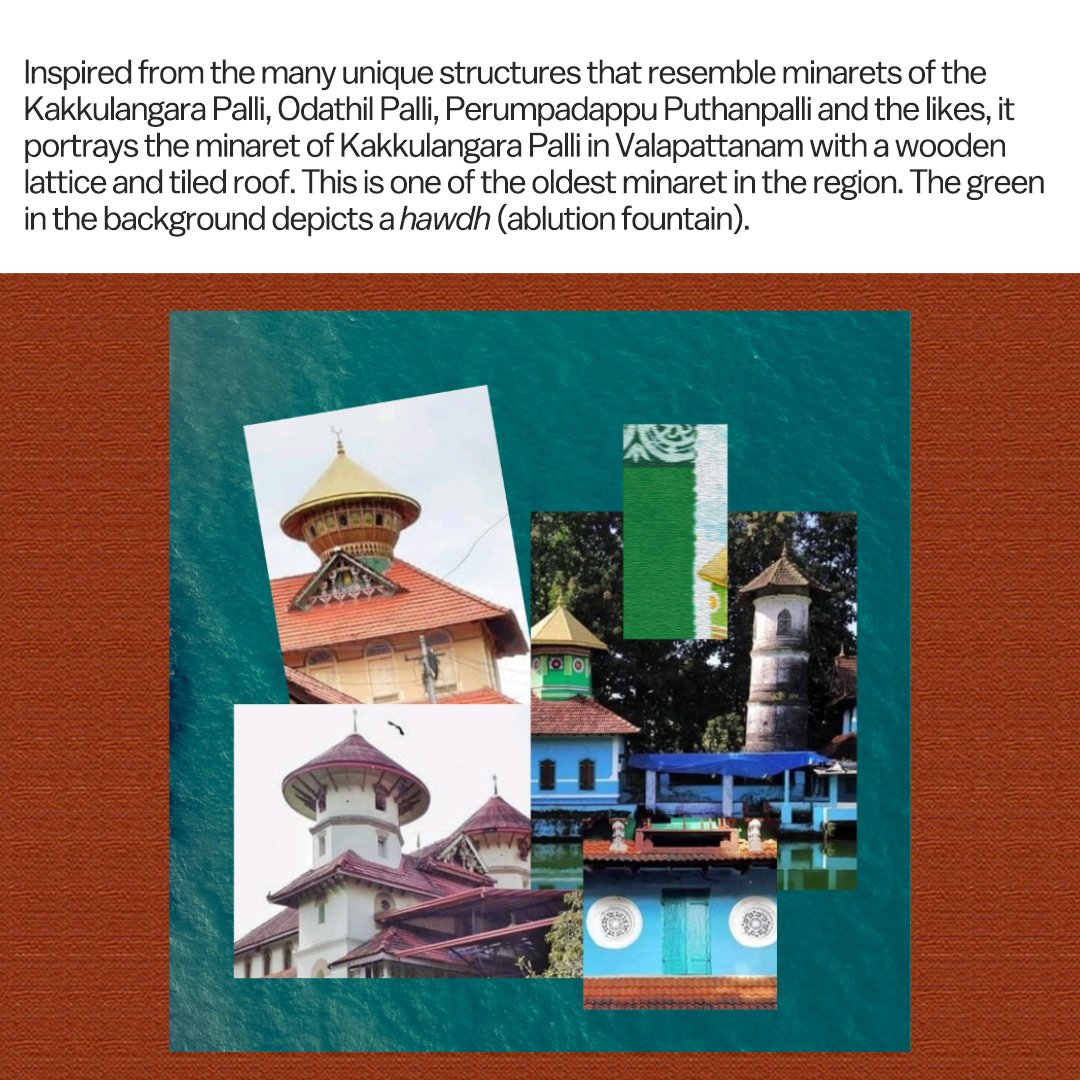
Inspired from the many unique structures that resemble minarets of the Kakkulangara Palli, Odathil Palli, Perumpadappu Puthanpalli and the likes, it portrays the minaret of Kakkulangara Palli in Valapattanam with a wooden lattice and tiled roof. This is one of the oldest minarets in the region. The green in the background depicts a hawdh (ablution fountain).
Evolution of Prayer Rugs in Kerala
by Aflah Habeeb and Basil Islam
Evolution of Prayer Rugs in Kerala
by Aflah Habeeb & Basil Islam
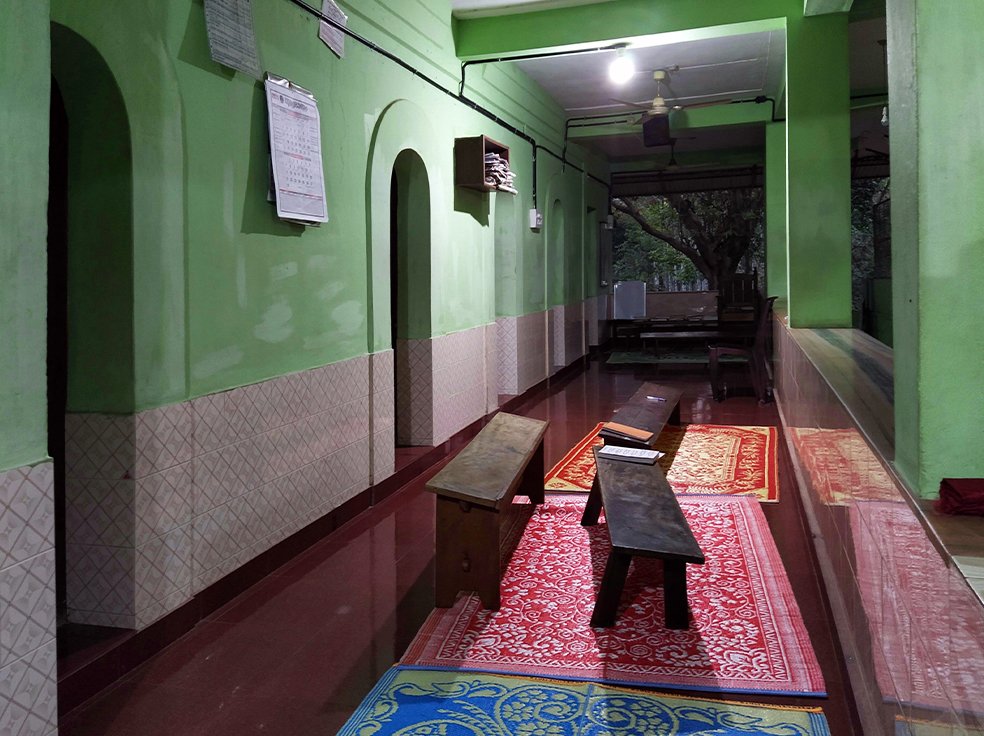
Mats were used extensively earlier than today. It served a variety of purposes. They were used for sleeping to offering prayers. Mats are generally called ‘Payas’ and have specific names according to the material used, size and thickness, weaving pattern, and purpose.
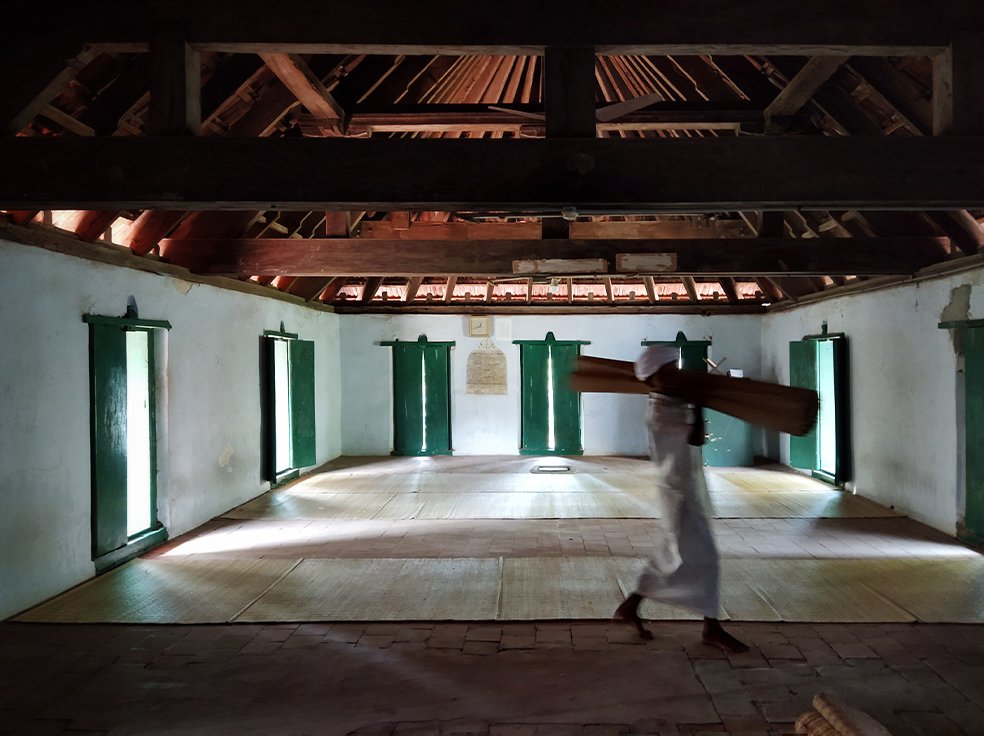
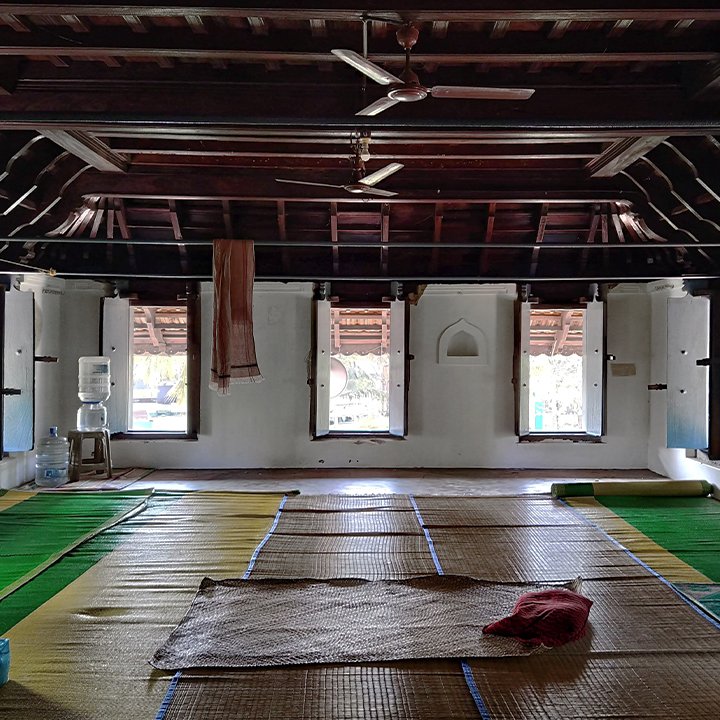
Based on the material, these mats can be classified as Olappayas or Pulppayas. Screwpine leaves found in the riverbanks are used to make olappaya. Pulppaya is made from korai grass. While olappayas were locally made and traded in markets like Edavilangu village in Kodungallur, pulppayas were produced in weaving centers in Tamilnadu – namely, Karur and Vettavalam.
In religious settings, mats hold an important role. Traditional rituals in the Hindu community require olappayas. Muslims use it as prayer rugs because it is clean and hence a suitable place to pray. These prayer rugs are called niskarappayas.
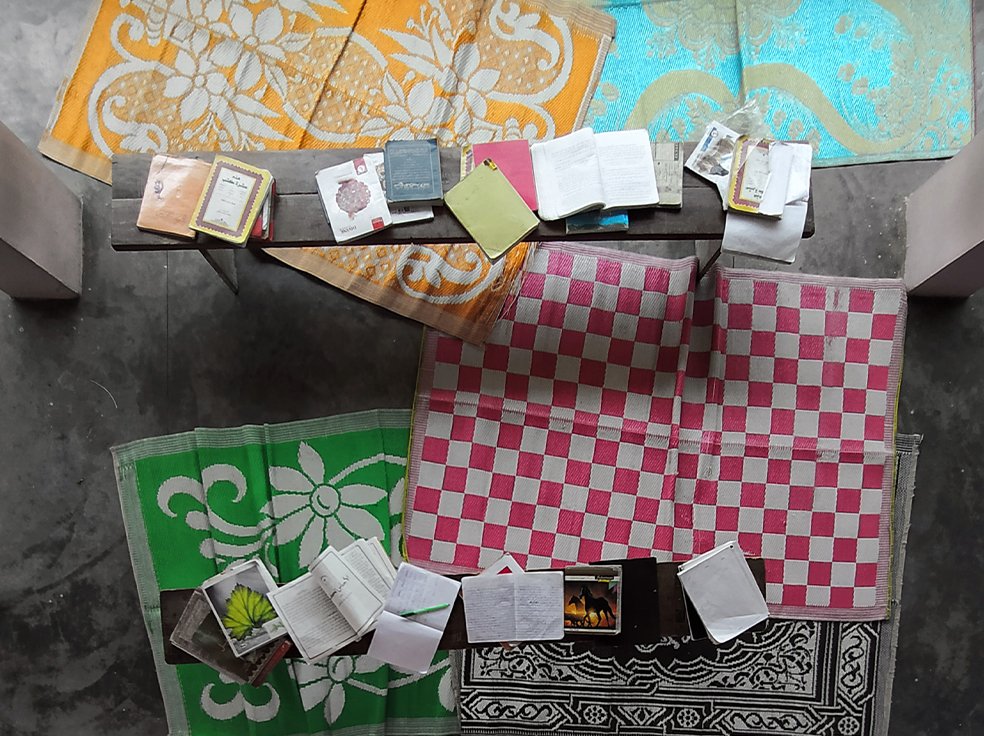
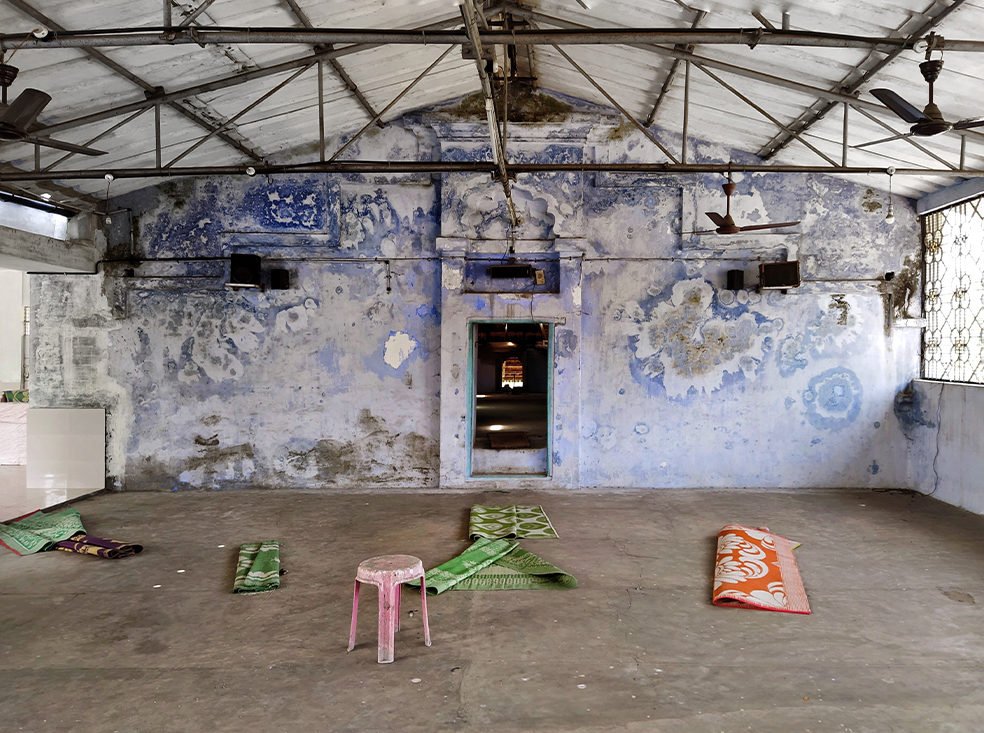
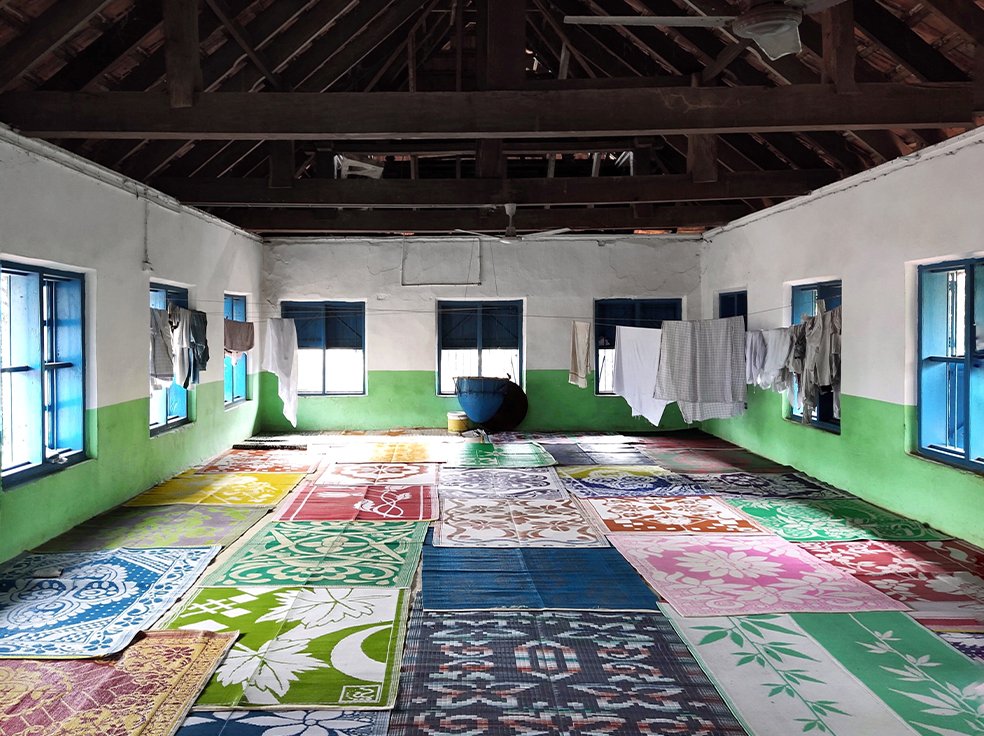
As a result of modernisation, saffs (long rug laid out in rows) in masjids shifted from pulppayas to plastic mats. Households also adopted plastic mats because it was cheaper and durable compared to traditional payas. These plastic mats are made from polypropylene in the production units of Maharashtra.
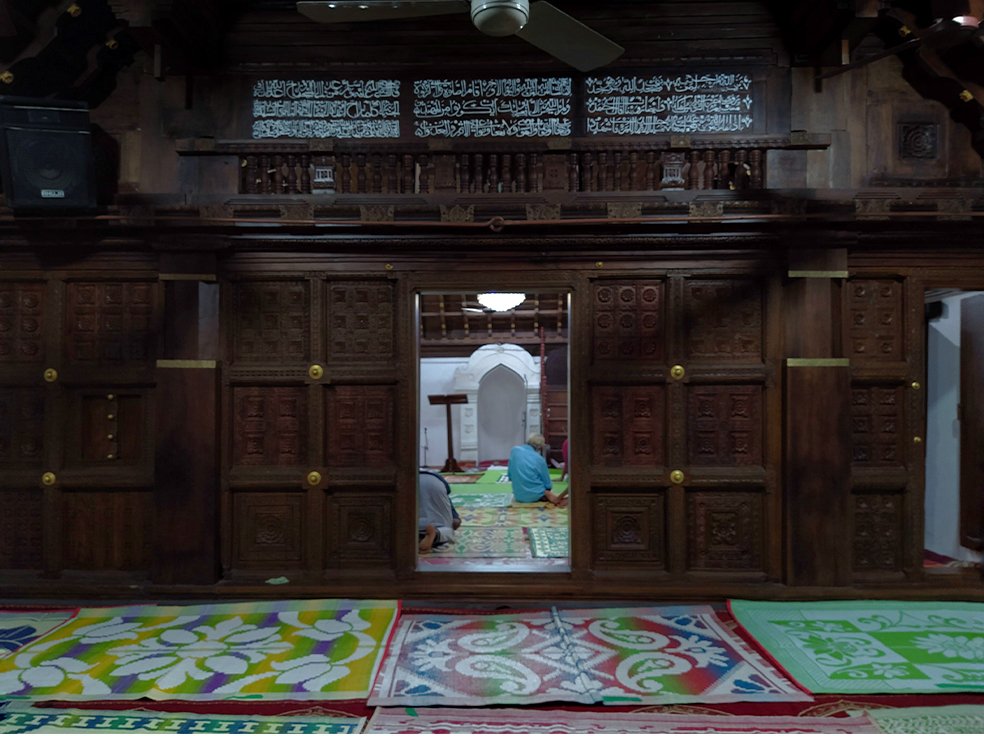
After the Gulf boom, the process of globalisation accelerated in the community with a good percentage of youth working in GCC states. Cultural commodities including Turkish prayer rugs a.k.a musallahs became a part of Muslim households. People returning from Mecca after the Hajj pilgrimage gifted musallahs to their dear ones. A cherished item with an exotic look and sacred character, musallah became an object of great reverence.
As a result of modernisation, saffs (long rug laid out in rows) in masjids shifted from pulppayas to plastic mats. Households also adopted plastic mats because it was cheaper and durable compared to traditional payas. These plastic mats are made from polypropylene in the production units of Maharashtra.
After the Gulf boom, the process of globalisation accelerated in the community with a good percentage of youth working in GCC states. Cultural commodities including Turkish prayer rugs a.k.a musallahs became a part of Muslim households. People returning from Mecca after the Hajj pilgrimage gifted musallahs to their dear ones. A cherished item with an exotic look and sacred character, musallah became an object of great reverence.
In religious settings, mats hold an important role. Traditional rituals in the Hindu community require olappayas. Muslims use it as prayer rugs because it is clean and hence a suitable place to pray. These prayer rugs are called niskarappayas.
The use and value of prayer rugs have changed a lot over the years. During the pandemic, the prayer rug industry is going through a paradigm shift. As demand for saffs in masjids dwindled, people are looking for individual musallahs that are handy and comfortable. and the new trend has shifted to pocket-sized prayer rugs.
Dhikriyāthul Masājid: Reminiscence of Destructed Masjids
by Salim Shafi
Dhikriyāthul Masājid: Reminiscence of Destructed Masjids
by Salim Shafi
Musalla – a word usually used to denote woven prayer rugs, means ‘place of prayer’. While it refers to a temporary space, masjid – abode of Allah, is supposed to be a more permanent place of worship. Irrespective of their permanence and size, both are spaces where believers humble themselves before their Lord, their places of prostration.
Rampant Islamophobia and efforts to persecute the Muslim community have caused the demolition of countless masjids across the globe.
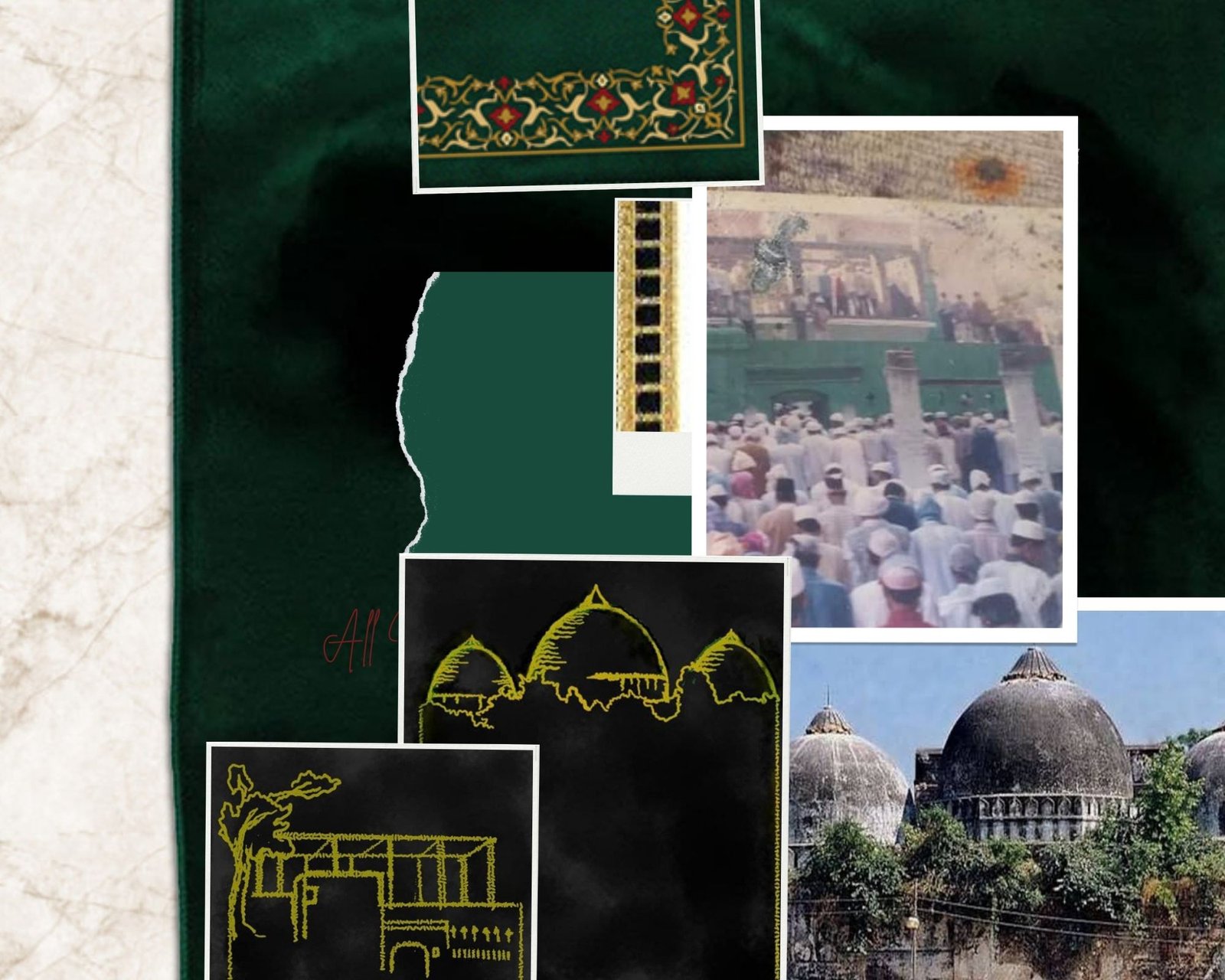
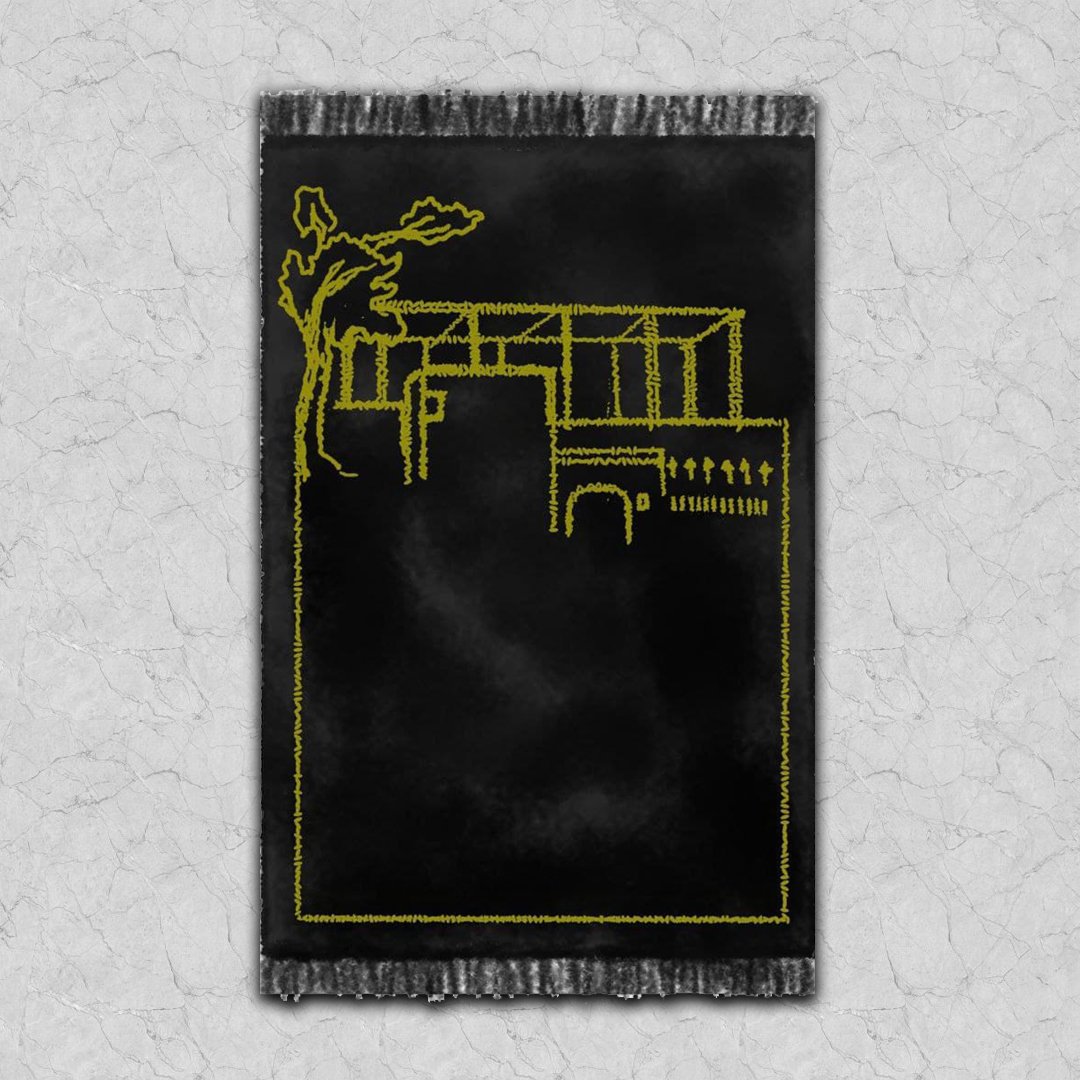
Babri is familiar to every Muslim and its demolition by Karsevaks revealed the ill-fated relationship between the state and the Muslim minority. Last month, Gharib Nawaz Masjid in Uttar Pradesh was demolished with utmost impunity. Despite its historical significance, the masjid was a place of worship and an indispensable venue for Muslims around.
This art series gives food for thought to the community to keep the memory of destroyed masjids and other spaces alive, through our prayer rugs.
Babri is familiar to every Muslim and its demolition by Karsevaks revealed the ill-fated relationship between the state and the Muslim minority. Last month, Gharib Nawaz Masjid in Uttar Pradesh was demolished with utmost impunity. Despite its historical significance, the masjid was a place of worship and an indispensable venue for Muslims around.
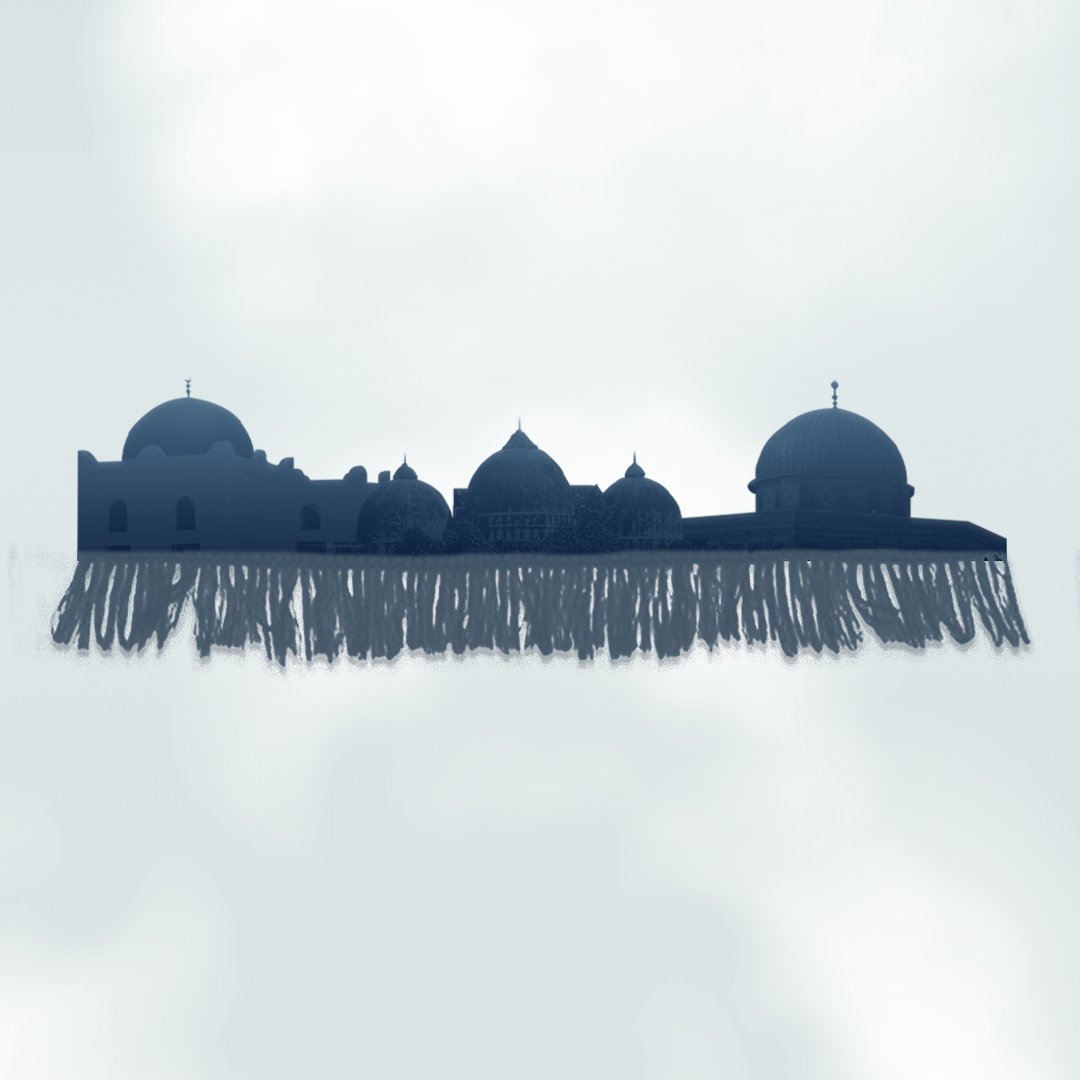
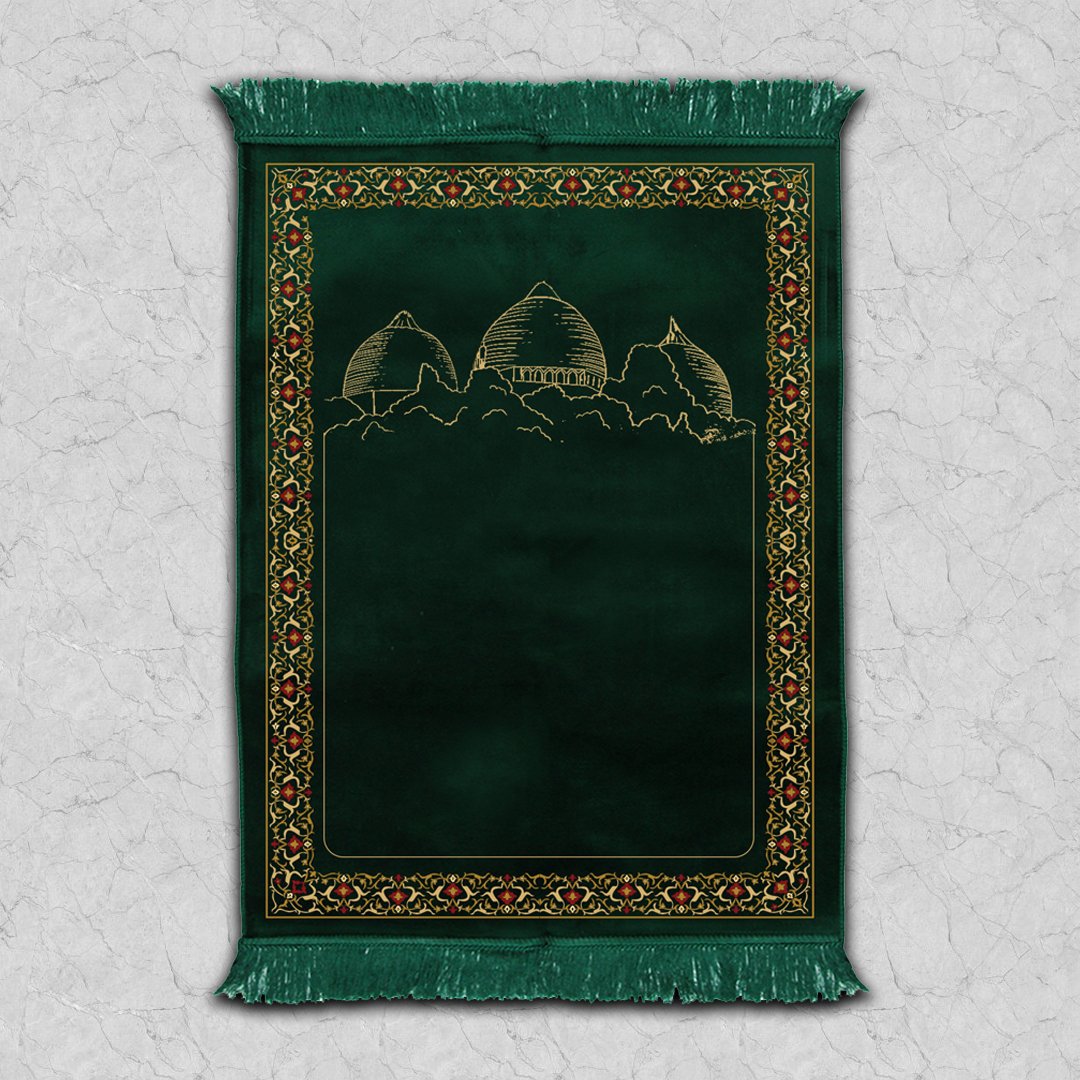
Amidst rising contestation against the existence of several masjids in the country, this virtual installation depicts how the memory of a destructed masjid, a place of worship that no longer exists, fades away from our memory.
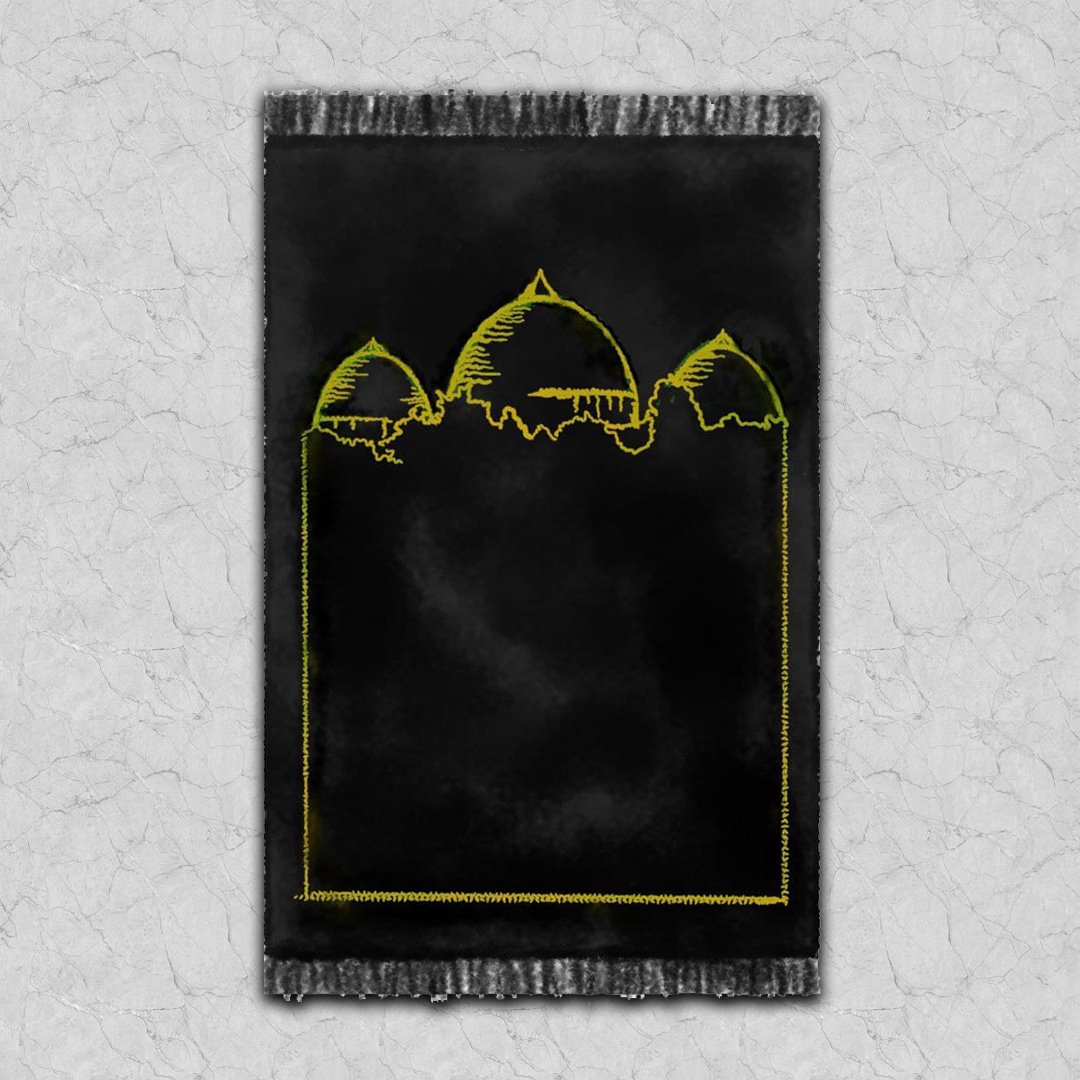
Dhikr in its highest sense is the constant remembrance of one’s position in the dominion of God. Dhikr here is conceived as a mode of resistance against the forced, continuous spells of obliviation upon our history and lives. Thus, ‘Dhikriyātul Masājid’ is an attempt to keep the memory of destroyed masjids alive through our prayer rugs.
Remembrance is a form of resilience. To keep alive the memory of destroyed masjids, we portray them on our prayer rugs. Babri Masjid and Gharib Nawaz Masjid are depicted on prayer rugs here.
This art series gives food for thought to the community to keep the memory of destroyed masjids and other spaces alive, through our prayer rugs.
Places Prayers Piety
by Suraiya
This video is an abstract take on a personal story of my great grandmother. The story of her witnessing jinns praying by the riverside is an orally passed-on memory in my mother’s family. Taking this childhood memory as a cue, I explore the concept of space and prayer, which ought not to be defined/limited by borders, materials or time. Like the jinns from valyumma’s life, prayers cross and emigrate through diverse and often unimaginable realms.
The video is hence, a humble attempt to illustrate the limitless space possible for prayer by placing the prayer rug over a long trail of landscapes; mountains, gardens, sea shores, deserts, roadways, lakes, hills, fertile lands etc. There is also a saying that wherever you make a prostration, the ground there will pay witness for you after death. It will affirm that at that moment, on that precise place on Earth, you made a sajda in remembrance of the Almighty.
Salla
by Akdham Nalakath
Following the everyday use of a prayer rug at my home, this video portrays how it breaks material binaries and connects the praying person to a spiritual sphere secluded from the outer world.
I have my own prayer rug to which I feel connected to. I kept wondering what is going on inside the minds of those who design such beautiful prayer rugs and what might have inspired them to go with a specific design. This video is also an attempt to depict that thought process.
Memories of Musallah
by Basil Islam, Hanan Mariam & Zakki Hamdan
These interviews are part of an attempt to document how different generations connect to their prayer rugs. With time, the making and use of prayer rugs has evolved. We can see a transition from grass mats to more colourful, mass-produced rugs aka Musallahs inspired from Turkish/Persian designs. While personal prayer rugs were a luxury in the past, the Gulf-boom and changing sensibilities made Musallahs much more prominent and popular. While most of them feel a spiritual affection towards their Musallahs, some find solace in activities beyond prayer, like sleeping on their rugs and some consider it simply as a space to pray.
A Padam of Padam
by Abdul Hannan
Colloquially, the prayer rug is known as Niskarapadam (niskaram means prayer, and padam indicates carpet). Thus the title embodies the two meanings of the term ‘padam’; one refers to cinema and the other to carpet.
This video explores diverse manifestations of prayer rug beyond its religious affiliation, by portraying its ordinary existence in everyday life. However, its irresistible aesthetic appeal persuades me to transcend the ordinary to center them around some surreal imagery as well.
Places Prayers Piety
by Suraiya
This video is an abstract take on a personal story of my great grandmother. The story of her witnessing jinns praying by the riverside is an orally passed-on memory in my mother’s family. Taking this childhood memory as a cue, I explore the concept of space and prayer, which ought not to be defined/limited by borders, materials or time. Like the jinns from valyumma’s life, prayers cross and emigrate through diverse and often unimaginable realms.
The video is hence, a humble attempt to illustrate the limitless space possible for prayer by placing the prayer rug over a long trail of landscapes; mountains, gardens, sea shores, deserts, roadways, lakes, hills, fertile lands etc. There is also a saying that wherever you make a prostration, the ground there will pay witness for you after death. It will affirm that at that moment, on that precise place on Earth, you made a sajda in remembrance of the Almighty.
Salla
by Akdham Nalakath
Following the everyday use of a prayer rug at my home, this video portrays how it breaks material binaries and connects the praying person to a spiritual sphere secluded from the outer world.
I have my own prayer rug to which I feel connected to. I kept wondering what is going on inside the minds of those who design such beautiful prayer rugs and what might have inspired them to go with a specific design. This video is also an attempt to depict that thought process.
Memories of Musallah
by Basil Islam, Hanan Mariam & Zakki Hamdan
These interviews are part of an attempt to document how different generations connect to their prayer rugs. With time, the making and use of prayer rugs has evolved. We can see a transition from grass mats to more colourful, mass-produced rugs aka Musallahs inspired from Turkish/Persian designs. While personal prayer rugs were a luxury in the past, the Gulf-boom and changing sensibilities made Musallahs much more prominent and popular. While most of them feel a spiritual affection towards their Musallahs, some find solace in activities beyond prayer, like sleeping on their rugs and some consider it simply as a space to pray.
A Padam of Padam
by Abdul Hannan
Colloquially, the prayer rug is known as Niskarapadam (niskaram means prayer, and padam indicates carpet). Thus the title embodies the two meanings of the term ‘padam’; one refers to cinema and the other to carpet.
This video explores diverse manifestations of prayer rug beyond its religious affiliation, by portraying its ordinary existence in everyday life. However, its irresistible aesthetic appeal persuades me to transcend the ordinary to center them around some surreal imagery as well.
Thasveer portrait series is a collection of photographs of people from the Muslim community with prayer rugs as the backdrop. They are documented wearing traditional prayer attire or carrying objects of religious significance. The series draws inspiration from ‘Ramadan Project’ by Mous Lamrabat, a Moroccan-Belgian photographer, wherein he brought together Muslims from across the world to exhibit their collection of prayer rugs.
Thasveer portrait series is a collection of photographs of people from the Muslim community with prayer rugs as the backdrop. They are documented wearing traditional prayer attire or carrying objects of religious significance. The series draws inspiration from ‘Ramadan Project’ by Mous Lamrabat, a Moroccan-Belgian photographer, wherein he brought together Muslims from across the world to exhibit their collection of prayer rugs.
Muslims attach to prayer rugs at different levels. It can be aesthetic, sensual, sacred or profane. Nevertheless, the prayer rugs, through the sense of touch or sight invoke a sense of spirituality and solace. This series is an attempt to document the pride, affection and bond Muslims have for their prayer rugs.
Muslims attach to prayer rugs at different levels. It can be aesthetic, sensual, sacred or profane. Nevertheless, the prayer rugs, through the sense of touch or sight invoke a sense of spirituality and solace. This series is an attempt to document the pride, affection and bond Muslims have for their prayer rugs.